
If you've ever spent time in an e-commerce warehouse, you know one core truth: picking efficiency directly determines customer satisfaction, order accuracy, and your bottom line. I've been a flow rack supplier for 12 years, and over that time, I've fielded dozens of questions from e-commerce operations managers: Are flow racks actually suited to our fast-paced, SKU-heavy environment? Or are they better left for old-school distribution centers with slow-moving pallets?
The short answer is: yes, when implemented correctly. But that "correctly" part is make-or-break. Too many e-commerce teams write off flow racks because they've seen cheap, poorly designed models that jam, cause product damage, or lead to more mistakes than they fix. Today, I want to break down how flow racks work, where they fit in e-commerce warehouses, and why they're one of the highest-impact investments we've offered modern e-commerce brands.
First, What Even Is a Flow Rack, Anyway?
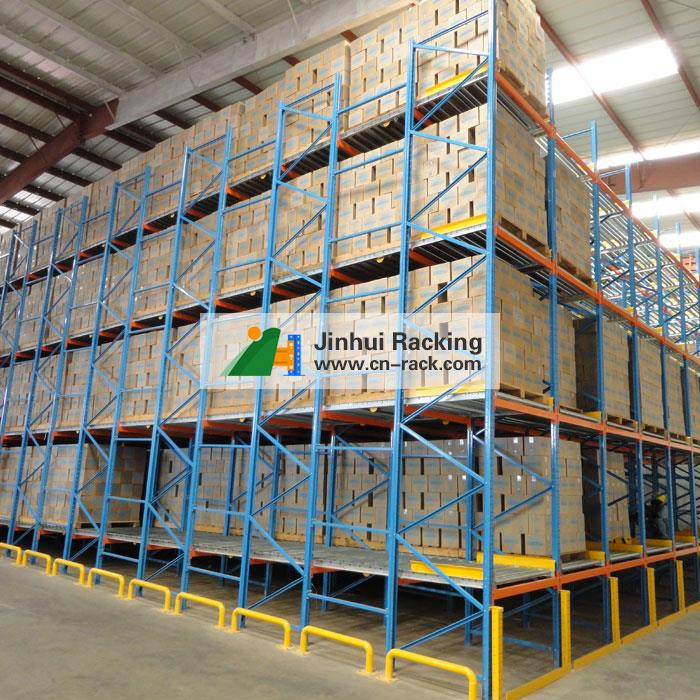
Let's skip the jargon for a second. Flow racks (also called pallet flow racks or gravity flow racks) are storage systems that use inclined rails, roller conveyors, or sloped tracks to move pallets from one end of the rack to the other. The "first-in, first-out (FIFO)" design is their superpower: when a new pallet gets loaded onto the back of the track, it gently glides forward until it hits the pallet in front of it. When a picker removes the front pallet to fulfill an order, the rest shift forward automatically-no pushing, pulling, or searching required.
There are a few key variations that matter for e-commerce, too. For bulk pallets of goods like pet food, bulk household supplies, or seasonal apparel, high-capacity models like High Capacity Storage System Pallet Flow Racking Gravity Flow Racking System are built to hold heavy loads without warping or slowing down. For smaller, more frequently picked items-like phone chargers, snack packs, or skincare samples-we have lighter-duty flow racks with adjustable rollers that handle individual cartons or totes, perfect for order picking zones.
Why E-commerce Warehouses Are Perfect For Flow Racks (The Data Backs It Up)
Let's ground this in real e-commerce pain points. Most e-commerce teams deal with two big bottlenecks: order fulfillment speed and inventory accuracy. Flow racks solve both, and the numbers don't lie. A 2023 study from the Material Handling Industry (MHI) found that e-commerce facilities using flow racks saw a 28% reduction in order picking time and a 19% drop in order error rates compared to standard selective racking or static pallet storage.
Why? Let's break it down. First, FIFO eliminates a huge e-commerce mistake: expired or overstocked inventory. For fast-moving consumables-like baby formula, beauty products, or non-perishable food-expiration dates are non-negotiable. When stock is added to the back of the flow track and picked from the front, you never have "dead stock" hidden under newer pallets that expires before it's sold. I had a client last year, a mid-sized online grocery brand, who was losing $12,000 a month to expired perishable snacks because they were rotating stock manually. After installing flow racks for their 150 most frequently picked SKUs, that loss dropped to under $1,000 a month in three months.
Second, flow racks maximize space in e-commerce warehouses, which are among the most crowded spaces in supply chains. E-commerce facilities rarely have the ceiling height or floor space of large-scale retail distribution centers, so they need to use every inch. Unlike static racks that only hold one or two pallets deep per slot, flow racks can hold 3 to 5 pallets per slot without adding any extra floor space. That means more SKUs in the same area, no more cramming pallets into aisles or blocking walkways, and safer operations. Our client, an online apparel brand with a 50,000 sq ft warehouse in Ohio, was able to add 30% more fast-moving SKUs after switching 20% of their storage to flow racks-without expanding their facility.
Third, speed is everything for e-commerce. With customers expecting same-day or next-day delivery, pickers can't waste time walking across aisles or digging through piles of pallets. Flow racks place the most frequently picked SKUs at waist height (ideal for standing pickers) and in easily accessible zones near packing and shipping stations. Our Heavy Duty Gravity Pallet Roller Racking is designed for high-turnover items, with heavy-gauge rollers that can handle thousands of moves a day without jamming-perfect for peak seasons like Black Friday or back-to-school, when order volume can triple overnight. I've seen pickers cut their time per order from 10 minutes to 3 minutes when working a flow rack zone during peak season.
Wait, But What Are The Tradeoffs? Flow Racks Aren't For Every E-commerce Brand
Let's be honest-flow racks aren't a magic bullet, and they're not right for every e-commerce operation. I've worked with brands that passed on them, and that was the right call. The biggest mistake I see is picking flow racks for the wrong SKUs. Flow racks work best for SKUs that have consistent turnover: things that sell at least 5 to 10 units a week, no exceptions. If you have SKUs that sell one unit a month, or are seasonal (like holiday decor or snow blowers), flow racks don't add value-static pallet racks or even off-site storage is cheaper.
Another tradeoff: flow racks require more upfront planning and maintenance. You can't just order a flow rack and drop it in; you need to map your SKUs by turnover, assign the fastest-moving ones to the most accessible flow slots, and train your team on how to load them correctly. If you overload a flow track or load pallets sideways, you get jams, broken products, or even safety hazards. We recently worked with a small e-commerce brand that tried to install cheap, unbranded flow racks from a foreign supplier without consulting our team. They had to rip them out three months later because the rollers bent under the weight of their bulk pet food pallets, and they had 12 cases of damaged product from jams. That's why working with a supplier who can customize your flow rack system is key-our Gravity Racking System is designed with adjustable roller spacing and load ratings tailored to e-commerce SKUs, so you avoid those pitfalls.
Space is another consideration, but not in the way you think. Flow racks work best in long, narrow zones, not in random spots around the warehouse. If your facility has a lot of small, scattered picking areas, flow racks might not fit into that layout. But for most e-commerce warehouses, which use a "zonal picking" model (assigning pickers to a specific area of SKUs), flow racks fit perfectly into those zones.
Real-World Example: How A DTC Home Goods Brand Turned Flow Racks Into 20% More Annual Revenue
Let me share a story that sums up why flow racks work for e-commerce. Last year, a DTC home goods brand that sells kitchen tools and decor reached out to me. They had a 25,000 sq ft warehouse in Texas, 80 SKUs, and were growing 40% a year- but they were struggling to keep up with orders. Their biggest pain points: order error rates were at 12%, which was leading to 15% of customers leaving negative reviews, and pickers were walking an average of 12 miles a day, leading to high turnover and missed orders.
We worked with them to design a custom flow rack system for their top 30 SKUs (which made up 75% of their order volume). We placed the flow racks in their picking zone, within 10 feet of packing stations, loaded their top-selling items like silicone spatulas and linen napkins into the flow tracks with FIFO functionality, and trained their team on how to load and maintain the system.
Six months later, the numbers were staggering: order error rates dropped to 2%, picker walking time fell by 60% (they now average 4.8 miles a day), and they reduced their labor costs in the picking zone by 22%. They told us that because of faster order fulfillment, they were able to offer free next-day delivery, which boosted their repeat purchase rate by 18%. That's not just a small win-that's flow racks directly driving revenue growth for an e-commerce brand.
How To Know If Flow Racks Are Right For Your E-commerce Warehouse
If you're on the fence, ask yourself these three questions:
- Do 60% or more of your SKUs turn over at least 5 units a week? If yes, flow racks will save you time and reduce waste.
- Are you dealing with order errors, expired stock, or high labor costs for picking? If any of these are true, flow racks directly solve those pain points.
- Can you allocate zonal space in your warehouse for a dedicated flow rack picking area? Most e-commerce warehouses can-you don't need to rework your entire facility, just a portion of your storage.
If you answered yes to most, flow racks are worth the investment. The key is working with a reputable supplier who can design a system tailored to your SKUs, not a one-size-fits-all model. We've spent 12 years refining our flow rack solutions for e-commerce, so whether you need High Capacity Storage System Pallet Flow Racking Gravity Flow Racking System for bulk SKUs or adjustable flow racks for small carton picks, we can build something that fits your operation.
Next Step: Let's Talk
Every e-commerce warehouse is different, so the best way to know if flow racks work for you is to talk through your specific challenges, SKU mix, and space. We offer free warehouse assessments to map out how flow racks can improve your efficiency, reduce errors, and boost your bottom line. If you're ready to stop guessing and start solving your picking and storage pain points, reach out to discuss your custom flow rack solution today.
References
Material Handling Industry. (2023). E-commerce Warehouse Efficiency Report: Fulfillment Best Practices for 2023 and Beyond. Charlotte, NC: MHI.
Warehouse Education & Research Council. (2022). Space Optimization Strategies for Fast-Growing E-commerce Facilities. Memphis, TN: WERC.
National Retail Federation. (2023). Peak Season Operations: Managing Demand in E-commerce Supply Chains. Washington, DC: NRF.