
In the ever - evolving landscape of warehouse management, the demand for efficient storage solutions has never been higher. As a supplier of Pallet Flow Racking, I am often asked whether this system can be effectively used in a dynamic warehouse environment. In this blog post, I will explore this question, delving into the features of Pallet Flow Racking, the characteristics of a dynamic warehouse, and how the two can work in harmony.
Understanding Pallet Flow Racking
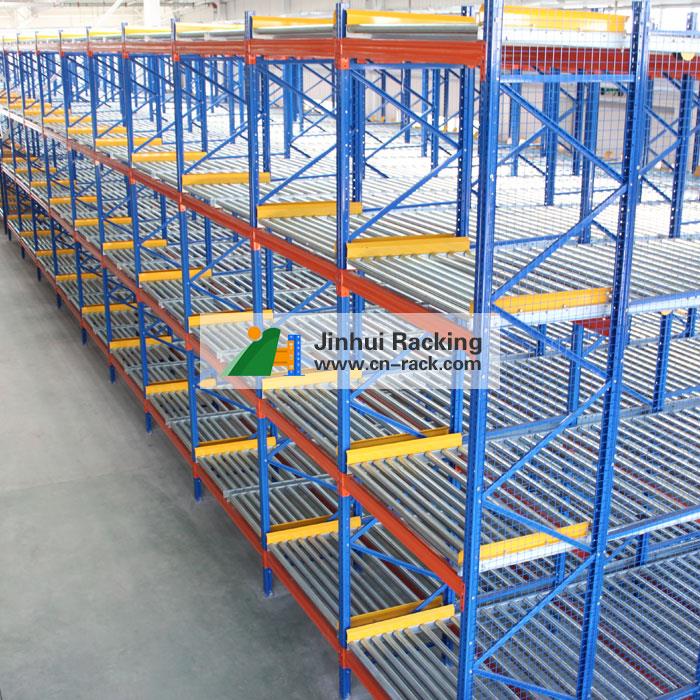
Pallet Flow Racking is a high - density storage system that utilizes gravity to move pallets from the loading end to the picking end. It consists of inclined lanes with rollers or wheels, allowing pallets to flow smoothly towards the front of the rack. This system is designed for first - in, first - out (FIFO) inventory management, which is ideal for perishable goods, products with expiration dates, and items that need to be rotated regularly.
One of the key advantages of Pallet Flow Racking is its high storage density. By eliminating the need for wide aisles, it can significantly increase the amount of storage space in a warehouse. This is particularly beneficial for warehouses with limited floor space. Additionally, the FIFO operation ensures that older inventory is used first, reducing the risk of product obsolescence.
Another benefit is its efficiency in terms of order picking. Since pallets are automatically positioned at the picking face, workers can quickly access the products they need, reducing the time spent searching for items. This leads to increased productivity and faster order fulfillment.
Defining a Dynamic Warehouse Environment
A dynamic warehouse environment is characterized by a high volume of incoming and outgoing goods, frequent changes in inventory levels, and a need for quick response times. In such an environment, warehouses often deal with a variety of products, each with its own storage requirements. The ability to adapt to changing market demands and customer orders is crucial.
Dynamic warehouses also typically have a high level of automation and integration with other supply chain systems. This includes the use of conveyor belts, automated guided vehicles (AGVs), and warehouse management systems (WMS) to optimize the movement of goods within the facility.
Can Pallet Flow Racking be Used in a Dynamic Warehouse?
The short answer is yes, Pallet Flow Racking can be an excellent choice for a dynamic warehouse environment, and here's why:
1. Adaptability to High - Volume Operations
In a dynamic warehouse, the volume of goods moving in and out can be substantial. Pallet Flow Racking can handle this high - volume throughput effectively. Its gravity - based system allows for continuous loading and unloading of pallets, ensuring a smooth flow of goods. For example, in a distribution center that receives large quantities of products daily and needs to ship them out quickly, Pallet Flow Racking can keep up with the pace, reducing bottlenecks and improving overall efficiency.
2. Compatibility with Automation
As mentioned earlier, dynamic warehouses often incorporate automation. Pallet Flow Racking can easily integrate with other automated systems. Conveyor belts can be used to load pallets onto the racking system, and AGVs can be employed to move pallets within the warehouse. This seamless integration with automation technologies enhances the overall productivity of the warehouse and reduces labor costs.

3. FIFO Inventory Management for Dynamic Inventory
In a dynamic warehouse, inventory levels can change rapidly, and the need to manage inventory effectively is crucial. The FIFO principle of Pallet Flow Racking ensures that inventory is rotated properly, even in a fast - paced environment. This is especially important for industries such as food and beverage, where product freshness is a top priority.
4. Space Optimization
Dynamic warehouses often face space constraints due to the large number of products they need to store. Pallet Flow Racking's high - density design helps maximize the use of available space. By reducing the amount of aisle space required, more pallets can be stored in the same area, allowing the warehouse to accommodate a larger inventory without the need for expansion.
Considerations for Using Pallet Flow Racking in a Dynamic Warehouse
While Pallet Flow Racking offers many benefits for dynamic warehouses, there are also some considerations to keep in mind:
1. Product Compatibility
Not all products are suitable for Pallet Flow Racking. Products that are irregularly shaped, unstable, or have a low weight - to - volume ratio may not flow smoothly on the inclined lanes. It is important to assess the characteristics of the products to be stored and ensure that they are compatible with the racking system.
2. Initial Investment
The installation of Pallet Flow Racking requires a significant initial investment compared to traditional racking systems. This includes the cost of the racking itself, as well as any necessary modifications to the warehouse layout, such as the installation of conveyor systems. However, it is important to consider the long - term savings in terms of increased productivity and space utilization when evaluating the cost - effectiveness of the system.
3. Maintenance
Like any other equipment, Pallet Flow Racking requires regular maintenance to ensure its proper functioning. The rollers or wheels need to be inspected and lubricated periodically, and any damaged components should be replaced promptly. A well - maintained racking system will have a longer lifespan and operate more efficiently.
Related Products and Their Applications
In addition to Pallet Flow Racking, there are other related products that can be used in a dynamic warehouse environment. For example, Warehouse Steel Storage Draw - out Racking and Shelving is a versatile storage solution that offers easy access to stored items. It is suitable for storing a variety of products, including small parts and tools.
Another option is the Heavy Duty Storage Drawer Racking Industrial Mold Rack System. This system is designed for storing heavy and large - sized items, such as industrial molds. It provides a safe and organized way to store these items, making them easily accessible when needed.
Conclusion
In conclusion, Pallet Flow Racking can be a valuable asset in a dynamic warehouse environment. Its ability to handle high - volume operations, integrate with automation, manage inventory effectively, and optimize space makes it a suitable choice for many warehouses. However, it is important to carefully consider the product compatibility, initial investment, and maintenance requirements before implementing the system.
If you are looking for a reliable storage solution for your dynamic warehouse, we invite you to contact us for a detailed consultation. Our team of experts can help you determine whether Pallet Flow Racking or other related products are the right fit for your specific needs. We are dedicated to providing high - quality storage solutions that can enhance the efficiency and productivity of your warehouse.
References
- "Warehouse Design and Management" by Edward F. Frazelle
- "Material Handling Handbook" by the Material Handling Industry of America