
If you've spent any time in the warehouse industry, you know that a racking system isn't just metal beams and frames stacked against a wall-it's the backbone of your entire operation. I've been selling and servicing warehouse racking solutions for over a decade, and the question I get asked most often isn't "what's the most expensive rack?" or "what holds the most weight?" It's "how do I actually measure if my current system is efficient enough?"
Efficiency here isn't a vague buzzword. It's about how quickly you can retrieve a pallet, how much space you're actually using, how little time your team spends moving around, and how often you avoid costly bottlenecks. After working with hundreds of warehouses across industries-from e-commerce fulfillment centers to cold storage facilities-I've learned that measuring racking efficiency requires mixing hard data with real-world on-the-ground observations. Let's break down the key metrics that actually matter, and how different racking types (like the ones we supply at our company) perform against them
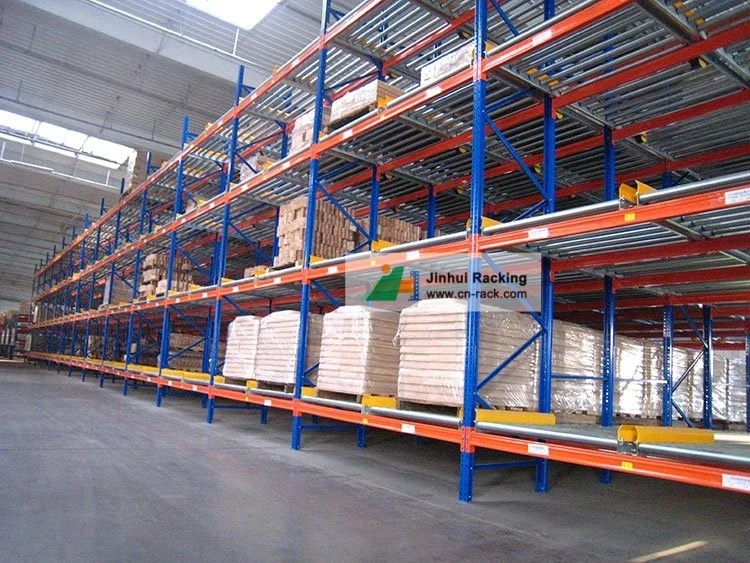
First, and most basic, is space utilization. This is the percentage of your total warehouse footprint that's actually used for storage, not walkways, aisles, or wasted gaps between pallets. I once worked with a small 10,000 sq ft e-commerce warehouse that was wasting nearly 30% of its space because it used outdated selective racking with unnecessarily wide aisles for forklifts that were only 4 feet wide. Space utilization sounds simple, but it's the foundation of efficiency. Higher utilization means you can store more inventory without expanding your warehouse, which saves tens of thousands in rent annually.
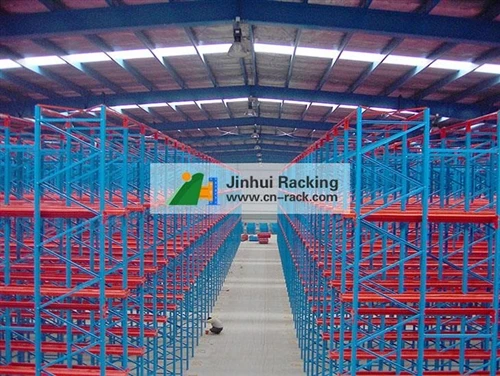
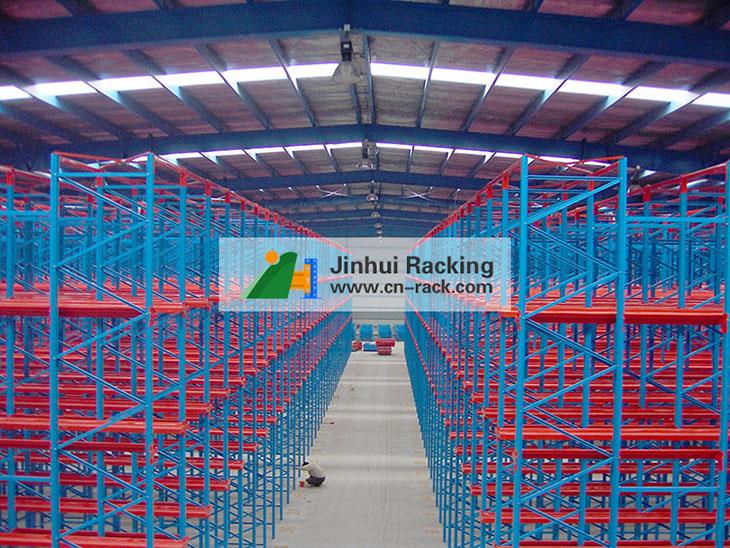
Different racking systems perform here, and it's critical to pick the right one for your inventory. For example, if you deal with high volumes of slow-moving SKUs, a compact system like Mobile Racking System can slash aisle space by 50% or more. Instead of fixed aisles every 10 feet, mobile racks sit on a base that rolls-your forklift only creates an aisle where it's needed, so you can store up to 30% more pallets in the same space. We installed these for a food distribution client last year, and they went from storing 1,200 pallets to 1,560 in the same footprint, no new construction required. For bulk, high-density storage, Drive In Racking is another top choice: it eliminates multiple aisles entirely, with pallets stored in single deep lanes, meaning space is used from front to back, not just the edges. We've seen Drive In Racking deliver 40% better space utilization than standard selective racking for cold storage facilities, too.
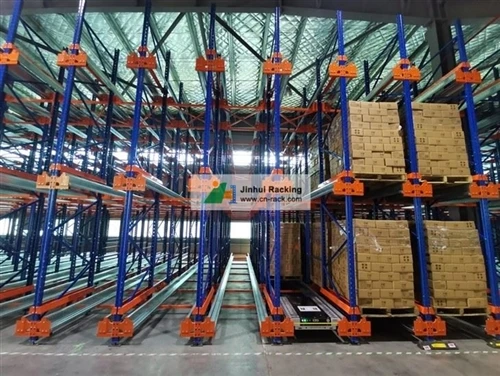
Next up is throughput rate-this is how many pallets you can put away (putaway) or pick (order selection) in an hour, shift, or day. Throughput is where a lot of warehouses trip up because they don't match their racking to their order profile. For example, a warehouse that ships 80% fast-moving SKUs needs a rack that lets workers grab pallets quickly, not one that makes them weave through lanes. Selective racking is great here, but for mixed SKUs, you need something that balances density and speed. We recently supported a client at Hannover Messe Shanghai who needed a cold storage solution that could handle heavy pallets and fast rotations, so we recommended our Smart Design Heavy Duty 4 Way Pallet Shuttle For Cold Room Storage. The shuttle moves pallets independently in lanes, so forklifts only need to drop or retrieve at the front-no waiting for forklifts to navigate a full lane. This client saw a 25% jump in order picking speed, because their team spent less time driving and more time picking.
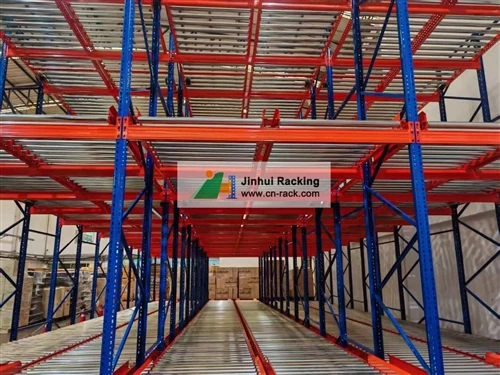
Throughput is also tied to accessibility-this is often called "pick face availability." If 90% of your orders come from 10% of your SKUs, you need those SKUs easy to reach, not buried at the back of a deep rack. Pallet flow racking, which uses inclined rollers to let pallets move from back to front as they're picked, is perfect for fast-moving SKUs because the first pallet is always at the front, ready to grab. A client in the automotive parts industry switched to Pallet Flow System and reduced order picking time per line item by 18%-their team no longer had to walk to the back of the rack for a common brake pad or filter. Even for slower-moving SKUs, a rack like 5 Deep Push Back Racking lets you store multiple pallets deep in a lane, but still lets you access the newest pallets first (or oldest, depending on setup) without unstacking every pallet in front. We worked with a beverage distributor on this: they store 5 pallets of soda syrup per lane, and their order pickers can reach any of the front 5 pallets without moving the rest, cutting down on retrieval time.
Another critical metric that's easy to overlook is labor efficiency. This covers how many labor hours it takes to handle a pallet, from putaway to order selection to inventory counts. Labor is usually the biggest expense in a warehouse, so if your racking is wasting time here, it's costing you way more than just space. I had a client a few years back who used outdated pushback racking that required workers to use a special cart to move pallets back-every putaway took 2 minutes, versus 45 seconds with a shuttle system. When we replaced their racking with our 4-way shuttle solution, their labor hours per pallet dropped by 30%, which translated to $120,000 a year in savings. It's not just about the rack itself either: poor layout, too many aisles, or hard-to-reach SKUs all add up to wasted steps. I always tell clients to do a time and motion study-watch your team for an hour, count how many steps they take, how often they wait for forklifts, and how many times they have to access a pallet multiple times to get the right one. That data will show you exactly where your racking is failing.
Inventory accuracy is also tied to racking efficiency, and it's something that impacts your bottom line more than you might think. If your racking is poorly designed, you might store pallets in the wrong place, leading to lost inventory or wrong orders being shipped. We had a retail client who was running a $500k annual loss from misplaced inventory-their selective racking had random open spaces, so workers would stack pallets anywhere instead of assigned locations. We helped them implement a structured racking plan with clear slotting (fast movers at waist height, slow movers higher up, cold items in designated lanes) and used our mobile racking system to create dedicated slots. Within six months, their inventory shrinkage dropped by 40%. Racking should make it easy to track where everything is, not hard.
Wait, can we talk about safety? Because that's indirectly efficiency too-if your racking is causing accidents, you're losing time to downtime, workers' comp claims, and even OSHA fines. I've seen warehouses skip measuring efficiency by skipping safety, but it's a two-way street. For example, Drive In Racking is dense, but if you don't design it with proper safety barriers for forklifts, you'll have collisions that shut down operations. All the racking we supply is engineered with safety in mind, but efficiency includes how often you avoid those disruptions. A client who switched to our pallet flow system saw zero forklift-rack collisions in a year, compared to 12 the previous year with selective racking-no more repairs, no more weeks of downtime while fixing beams.
Let's talk about how to actually calculate these metrics, not just what they are. For space utilization, take your total storage area (length x width of your warehouse) and subtract the non-storage space (aisles, walkways, office areas, equipment zones). Divide that by total area, times 100-aim for 70% or higher, depending on your operation. For throughput, track how many pallets are put away or picked over a 8-hour shift, divide by number of workers or forklifts, so you get a rate per hour. For labor efficiency, take total labor hours for a day, divide by number of pallets handled, to get hours per pallet. For inventory accuracy, count the number of orders shipped that had missing or wrong items, divide by total orders, times 100-aim for less than 1% error.
Here's the mistake I see most often: warehouses pick a racking system based on cost upfront, not long-term efficiency. A cheap, basic rack might save you $5,000 today, but if it's wasting 20% of your space and adding 15% to labor costs, you'll lose that money in a year. We often work with clients to run a total cost of ownership (TCO) analysis, not just a purchase price comparison. For example, our mobile racking system costs more upfront, but the space savings alone pay for it in 2-3 years, plus the labor savings on top of that.
At our company, we don't just sell racking-we help you measure what you need. Whether you're dealing with a cold storage facility that needs the shuttle system for temperature-sensitive SKUs, or a bulk distributor that needs drive-in racking for full pallets, we can do an on-site assessment to show you exactly where your current system is falling short.
If you're ready to stop guessing and start measuring your warehouse racking efficiency, or if you want to upgrade your system to save space, labor, and time, get in touch with our team to discuss your specific needs. We'll walk through your operations, run the numbers, and recommend the right solution for your business.
References:
- Warehouse Efficiency Metrics: A Guide for Distribution Centers. Supply Chain Management Review.
- Racking System Space Utilization Calculations and Best Practices. Modern Materials Handling.
- Labor Efficiency in Warehouses: Identifying Hidden Losses. Journal of Supply Chain Operations.
- Cold Storage Racking Solutions: Balancing Density and Accessibility. International Cold Storage Association.
- Total Cost of Ownership for Warehouse Storage Systems. Material Handling Industry Association.