
What is the impact of drive in racking on warehouse humidity control?
As a drive in racking supplier, I have had the opportunity to witness firsthand how this type of storage solution can significantly impact warehouse humidity control. Drive in racking systems are known for their high - density storage capabilities, making them a popular choice for warehouses of all sizes. However, their design and usage can have both positive and negative effects on the humidity levels within a warehouse environment.
Positive impacts of drive in racking on warehouse humidity control
Improved air circulation in some configurations
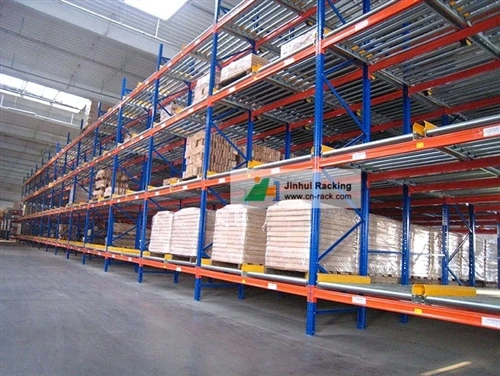
In certain warehouse setups, drive in racking can contribute to better air circulation. When properly installed, the lanes in drive in racking allow for the passage of air. This is particularly true in a well - planned warehouse where the layout takes into account the flow of air. For example, if the drive in racking is installed parallel to the direction of the air supply from ventilation systems, it can help distribute the conditioned air more evenly throughout the warehouse.
The open lanes in the drive in racking prevent the formation of large stagnant air pockets. Stagnant air can trap moisture, leading to increased humidity levels. By enabling air to move through the storage area, the drive in racking helps to keep humidity levels in check by promoting the exchange of moist air with drier, conditioned air. This is especially important in warehouses where the stored products are sensitive to high humidity.
Protection against humidity - induced damage
Drive in racking systems can offer some degree of protection to the stored goods from humidity - induced damage. Since the products are stored on pallets within the racking structure, they are elevated off the warehouse floor. The floor is often a source of moisture, especially in areas with poor insulation or high ground water levels. By keeping the products off the floor, the drive in racking reduces the risk of the goods coming into direct contact with moisture.
In addition, the organized storage provided by drive in racking allows for better product management. This means that products can be more easily inspected for signs of humidity damage. Warehouse staff can quickly identify areas where humidity may be having an impact and take appropriate action, such as re - arranging the storage or increasing dehumidification efforts.
Negative impacts of drive in racking on warehouse humidity control
Limited air circulation in dense setups
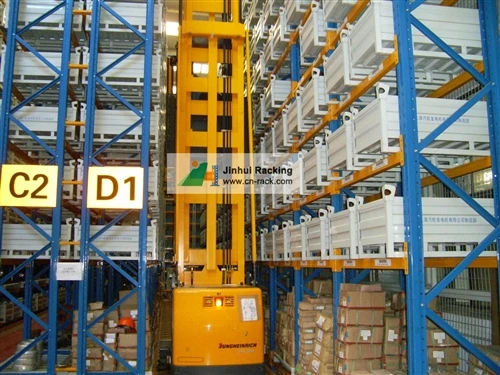
One of the main challenges with drive in racking is that in very dense installations, air circulation can be severely restricted. As the number of pallets stored in the racking system increases, the space between the pallets and within the lanes becomes smaller. This can create barriers to the free movement of air, leading to the formation of micro - environments with higher humidity levels.
In these dense setups, the air may not be able to reach the inner parts of the racking structure effectively. As a result, moisture can accumulate in these areas, potentially causing problems for the stored products. For example, in a cold storage warehouse using drive in racking, the lack of air circulation can lead to frost formation on the products or in the racking itself.
Difficulty in humidity monitoring
Drive in racking can make it more difficult to monitor humidity levels accurately throughout the warehouse. The complex structure of the racking can block the line - of - sight for humidity sensors, making it challenging to get a comprehensive view of the humidity conditions. In some cases, sensors may only be able to measure the humidity in the open areas of the warehouse, while the humidity levels within the racking structure remain unknown.
This lack of accurate humidity monitoring can be a significant problem, as it may lead to undetected humidity issues. If high humidity levels are not identified in a timely manner, it can cause damage to the stored products, such as mold growth, corrosion of metal products, or degradation of food items.
Strategies to mitigate the negative impacts
Optimize the racking layout
To improve air circulation in drive in racking systems, it is crucial to optimize the layout of the racking. This may involve leaving wider lanes between the racking rows to allow for better air movement. Additionally, the orientation of the racking should be considered in relation to the ventilation systems in the warehouse. By aligning the racking with the airflow, the chances of creating stagnant air pockets are reduced.
Warehouse Drive in Pallet Racking System for Cold Room and Processing Industrial provides detailed information on how to design an efficient drive in racking system that takes into account the warehouse's environmental conditions, including air circulation and humidity control.
Install additional ventilation
In situations where the drive in racking significantly restricts air circulation, additional ventilation systems can be installed. This may include local fans or ductwork to direct air into the racking structure. These ventilation solutions can help to break up stagnant air and promote the even distribution of humidity within the warehouse.
For cold storage warehouses, specific ventilation strategies are required to prevent the formation of frost and ice. By using fans to circulate cold air evenly through the drive in racking, the risk of humidity - related issues can be minimized.


Use advanced humidity monitoring technology
To overcome the challenge of monitoring humidity in drive in racking systems, advanced humidity sensors can be used. These sensors can be placed at multiple points within the racking structure, including deep inside the lanes and between the pallets. Wireless sensors are particularly useful as they can transmit data to a central monitoring system, allowing warehouse managers to keep a close eye on humidity levels in real - time.
Conclusion
Drive in racking has a complex relationship with warehouse humidity control. While it can offer some benefits in terms of air circulation and product protection, it also presents challenges in the form of restricted air movement and difficult humidity monitoring. As a drive in racking supplier, we understand the importance of addressing these issues to ensure the optimal storage conditions for our customers' products.
If you are considering implementing a drive in racking system in your warehouse and want to learn more about how to manage humidity effectively, please feel free to explore our Drive - In / Drive - Through Racking solutions. We are here to assist you in finding the right racking solution that meets your needs and ensures the best possible humidity control in your warehouse. Our team of experts is ready to answer any questions you may have and discuss your specific requirements for a successful warehouse storage setup. Contact us today to start the conversation.
References
- Some relevant industry reports on warehouse storage and climate control.
- Academic studies on the impact of storage systems on indoor environmental conditions.