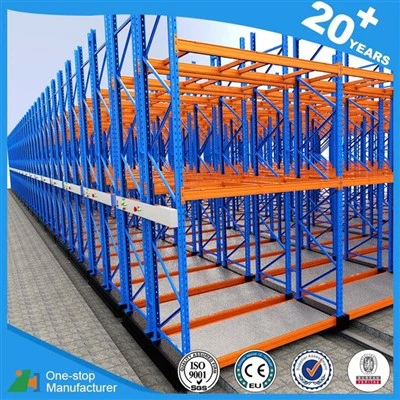

Managing inventory rotation in a warehouse is crucial for businesses to ensure product freshness, reduce waste, and meet customer demands efficiently. As an automated storage system supplier, I've seen firsthand how these high - tech solutions can revolutionize inventory rotation. In this blog, I'll break down how an automated storage system takes care of inventory rotation and why it's a game - changer for modern warehouses.
Understanding Inventory Rotation
First off, let's talk about what inventory rotation is. Simply put, it's the process of moving products in and out of storage in a specific order. The most common methods are First - In, First - Out (FIFO) and Last - In, First - Out (LIFO). FIFO is great for perishable goods like food and pharmaceuticals, where the oldest items need to be sold first. LIFO, on the other hand, is sometimes used for non - perishable items in certain accounting scenarios.
How Automated Storage Systems Work
Automated storage systems are like the brains and brawn of a warehouse. They use a combination of hardware and software to manage inventory. The hardware includes things like conveyor belts, robotic arms, and shuttle systems, while the software is responsible for coordinating all these moving parts.
Shuttle-Based Systems for Inventory Rotation
One of the key components in many automated storage systems is the shuttle. A Shuttle Pallet Racking System is designed to move pallets in and out of storage locations quickly and accurately. The shuttles can operate on tracks within the racking system, allowing them to access different levels and bays.
For FIFO inventory rotation, the shuttle system works in a really cool way. When a new pallet arrives, it is placed at the end of a storage lane. The shuttles then push the older pallets forward towards the picking area. This ensures that the oldest inventory is always picked first. It's a seamless process that reduces the risk of human error and speeds up the entire inventory management process.
The Radio Shuttle Racking System is another great example. These high-performance racks are designed to work in tandem with the shuttle systems. They provide a stable and organized storage space for pallets, making it easier for the shuttles to navigate and perform inventory rotation.
Software Management for Precise Rotation
The heart of an automated storage system is its software. This software is responsible for keeping track of every single item in the warehouse. It knows the exact location of each pallet, its arrival time, and its expiry date (if applicable).
Using this information, the software can make intelligent decisions about inventory rotation. It can prioritize which pallets need to be picked first based on the FIFO or LIFO rule. For instance, if a certain product has a nearing expiry date, the software will ensure that it is at the forefront of the picking queue.
Smart Automated Warehouse Storage
The concept of Smart Automated Warehouse Storage takes inventory rotation to the next level. These systems use advanced sensors and real - time data analytics to optimize the entire warehousing process.
Sensors installed in the racks and on the shuttles can detect the weight, size, and position of each pallet. This data is then sent to the central software system, which can adjust the inventory rotation process accordingly. For example, if a pallet is misaligned or damaged, the system can quickly identify the issue and take corrective action.
Warehouse Shuttle System Benefits for Rotation
A Warehouse Shuttle System offers numerous benefits when it comes to inventory rotation. Firstly, it significantly reduces labor costs. Instead of having workers manually move pallets around the warehouse, the shuttles do the heavy lifting. This not only saves time but also minimizes the risk of workplace injuries.
Secondly, the shuttle system allows for a higher density of storage. Because the shuttles can operate in narrow aisles and multiple levels, the warehouse can store more products in the same amount of space. This is especially important for businesses with limited warehouse space.
Manufacturer's Role in Optimizing Rotation
As an Automatic Storage Radio Pallet Shuttle Racking System Manufacturer, we play a crucial role in helping businesses optimize their inventory rotation. We work closely with our clients to understand their specific needs and requirements.
We offer customized solutions that are tailored to the type of products they store and the volume of inventory they handle. For example, if a client deals with a large volume of perishable goods, we can design a system that prioritizes FIFO inventory rotation.
Quality Control and Maintenance
To ensure that the inventory rotation process runs smoothly, regular quality control and maintenance are essential. Our team of experts can conduct routine checks on the hardware components, such as the shuttles and conveyor belts, to make sure they are in good working condition.
We also provide software updates to keep the system up-to-date with the latest features and security patches. This helps to prevent any glitches or malfunctions that could disrupt the inventory rotation process.
Cost - Efficiency and ROI
Investing in an automated storage system for inventory rotation may seem like a big upfront cost, but it offers significant long - term savings. The reduction in labor costs, lower risk of product spoilage, and increased storage density all contribute to a higher return on investment (ROI).
Over time, businesses can expect to see a significant improvement in their bottom line as a result of more efficient inventory management.
Contact Us for Your Inventory Rotation Needs
If you're looking to improve your inventory rotation process and take your warehouse management to the next level, we're here to help. Our automated storage systems are designed to meet the diverse needs of modern businesses. Whether you're in the food industry, pharmaceuticals, or any other sector that requires efficient inventory management, we have the solution for you.
Get in touch with us to discuss your specific requirements and find out how our automated storage systems can transform your warehouse operations.


References
- "Automated Warehouse Systems: Design and Operation" by Peter K. T. Loh
- "Inventory Management: Principles and Practices" by David J. Closs, James R. Stock, and Douglas M. Lambert
- Industry whitepapers on automated storage and inventory management.