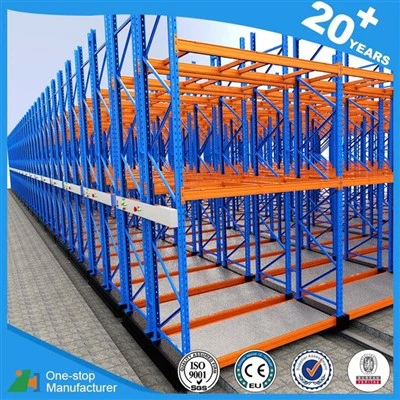

In the dynamic landscape of warehouse management, the pursuit of operational efficiency and worker well - being is unceasing. One solution that has proven to be a game - changer in this arena is the Push Back Racking system. As a Push Back Racking supplier, I have witnessed firsthand how this innovative storage solution can significantly improve ergonomics in the warehouse.
Understanding Push Back Racking
Push Back Racking is a high - density pallet storage system that allows for multiple pallets to be stored deep within a single lane. It operates on a system of nested carts that roll on inclined rails. When a new pallet is placed at the front of the lane, it pushes the existing pallets back along the rails, creating a first - in, last - out (FILO) storage method.
The design of the Push Back Pallet Rack System is based on principles of space optimization and efficient material handling. It maximizes the use of vertical and horizontal space in the warehouse, reducing the footprint required for storage.
Ergonomic Benefits of Push Back Racking
Reduced Physical Strain on Workers
In traditional pallet racking systems, workers often have to reach far into racks to access or store pallets, especially in deep - lane configurations. This can lead to excessive stretching, bending, and twisting, which are major causes of musculoskeletal disorders (MSDs). With Push Back Racking, pallets are brought closer to the aisle, reducing the need for workers to over - extend themselves.
For example, in a typical selective racking system with deep lanes, a worker may need to reach up to 10 feet or more to access a pallet. In contrast, Push Back Racking brings the pallets to a more accessible position within a few feet of the aisle. This not only reduces the physical effort required but also decreases the risk of injuries such as back strains, shoulder injuries, and hernias.
Improved Visibility and Access
Visibility is crucial in the warehouse environment to ensure safe and efficient operations. In traditional racking systems, pallets stored deep in the racks can be difficult to see, especially if they are stacked high. This can lead to errors in inventory management and increase the risk of accidents.
Push Back Racking enhances visibility by presenting pallets at the front of the lane. Workers can easily identify the pallets they need without having to peer into the depths of the rack. This improved visibility also allows for quicker and more accurate inventory checks, reducing the time spent searching for items.
Moreover, the access to pallets is more straightforward. Workers can use forklifts or other material handling equipment to easily retrieve or store pallets at the front of the lane, without having to navigate through a maze of pallets in deep - lane racking systems.
Streamlined Workflow
The design of the Push Back Racking System promotes a more streamlined workflow in the warehouse. Since pallets are stored in a sequential manner and are easily accessible, the time taken to load and unload pallets is significantly reduced.
This means that workers can complete their tasks more quickly and efficiently, with less time wasted on manoeuvring and re - arranging pallets. A more streamlined workflow also reduces the likelihood of bottlenecks in the warehouse, ensuring a smooth flow of goods from the receiving area to the storage area and finally to the shipping area.
Adaptability to Different Warehouse Layouts
Push Back Racking is highly adaptable to different warehouse layouts and operational requirements. It can be customized to fit various warehouse sizes, shapes, and ceiling heights. This adaptability allows warehouses to optimize their storage space while still maintaining good ergonomic practices.
For instance, in a warehouse with limited floor space, Push Back Racking can be installed in a way that maximizes vertical storage without sacrificing worker comfort. In a large - scale distribution center, the system can be configured to handle high - volume pallet storage, with multiple lanes and levels to accommodate a large number of pallets.
Choosing the Right Push Back Racking for Your Warehouse
Capacity and Load Requirements
When selecting a Push Back Racking system, it is essential to consider the capacity and load requirements of your warehouse. Determine the weight and size of the pallets you will be storing, as well as the maximum number of pallets you need to store in each lane.
Our Push Back Shelving comes in a variety of capacities, allowing you to choose the system that best suits your specific needs. Whether you are storing lightweight or heavy - duty pallets, we have a solution that can provide reliable storage.
Compatibility with Material Handling Equipment
Another important factor to consider is the compatibility of the Push Back Racking system with your existing material handling equipment. Forklifts, reach trucks, and other equipment need to be able to operate safely and efficiently in the aisles and around the racking system.
Make sure to consult with our team of experts, who can help you determine the appropriate aisle width and equipment - compatibility requirements for your warehouse. We can also provide guidance on the proper use of the equipment in conjunction with the Push Back Racking system to ensure maximum productivity and safety.
Safety Features
Safety is a top priority in any warehouse environment. Our Push Back Racking systems are designed with several safety features to protect workers and prevent accidents. These features may include anti - roll - back devices, load stop bars, and structural reinforcements.


We also provide comprehensive training and installation services to ensure that your Push Back Racking system is installed correctly and that your workers are properly trained on its safe operation. This helps to minimize the risk of accidents and injuries in the warehouse.
Conclusion
In conclusion, Push Back Racking offers significant ergonomic benefits in the warehouse environment. By reducing physical strain on workers, improving visibility and access, streamlining workflow, and being adaptable to different warehouse layouts, it can enhance both the efficiency and safety of your warehouse operations.
As a Push Back Racking supplier, we are committed to providing high - quality products and services that meet the diverse needs of our customers. If you are interested in improving the ergonomics and efficiency of your warehouse, we invite you to contact us for a consultation. We can help you determine the best Push Back Racking solution for your specific requirements and guide you through the entire process, from design and installation to after - sales support.
References
- "Warehouse Ergonomics: A Guide to Designing and Evaluating WorkSystems." Occupational Safety and Health Administration (OSHA).
- "High - Density Storage Systems: Design, Application, and Performance." Warehouse Education and Research Council (WERC).
- "Pallet Racking Design and Safety Standard." American National Standards Institute (ANSI).