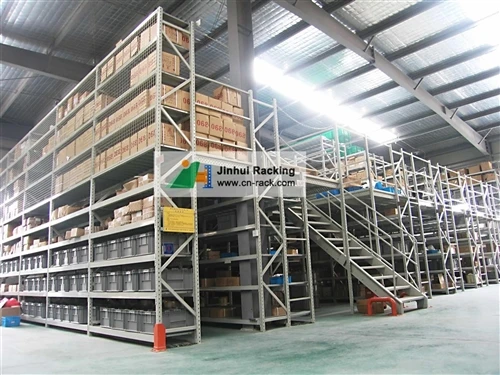

If you run a warehouse, you've probably stared at your empty vertical space at some point-wondering how to make more room without remodeling the entire building. That's where mezzanine racking comes in, right? I'm from a mezzanine racking supplier, and one question I get all the time is: "Can this stuff even work with automated storage equipment?" At first, I used to just give a simple yes or no, but now I know it's way more layered than that. A lot of folks mix up basic mezzanines with the heavy-duty, automated-friendly setups we sell, so let's break this down.
First, let's get on the same page about what we're talking about. When people say "mezzanine racking," they're usually thinking of that steel structure you bolt onto existing warehouse columns to add a second (or even third) floor-no new construction, just smart use of height. But not all mezzanines are equal. For automated gear like conveyor systems, AGVs (automated guided vehicles), or small order pickers, you can't just slap up a flimsy rack and call it a day. That's why most of our clients end up going for something like a Steel Mezzanine Floor Rack-it's built with reinforced beams and a solid deck that can handle way more than just static pallets.
Wait, why does the rack itself matter for automation? Let's say you have a mezzanine and you want to roll an AGV back and forth on it to move parts to picking stations. If the floor is bouncy or the beams are too thin, the whole structure will flex when the AGV is moving. That flex might not sound like a big deal, but over time, it can throw off the AGV's navigation sensors, cause conveyor belts to misalign, or even damage the load. We've had a handful of early clients test cheap, thin mezzanines for automation, and within three months, they were calling us to fix issues because their automated gear kept jamming. So the foundation is non-negotiable.
Speaking of structure, when we design mezzanines for automated use, we have to consider load distribution in a way that regular mezzanines don't. Standard mezzanines work if you're just stacking pallets up there, but automated systems have concentrated loads-an AGV might weigh 2,000 pounds, and a conveyor can have heavy parts running nonstop. That's where a Mezzanine Storage System with layered racking comes in handy. The multi-layer design lets you split load zones: one layer for storage, one for conveyor paths, and another for picking. We calculate every beam and column to make sure the total weight (static plus moving) doesn't exceed the manufacturer's ratings, which is something you can skip if you're only storing static goods.


A common scenario I see is e-commerce clients with small order volumes at first, then expanding and switching to automated order picking. They'll start with a basic mezzanine, then realize their old setup can't handle the new AGVs and sorters. That's why it's smart to plan for automation from day one. For example, we had a client in the apparel space who initially used our basic steel mezzanine for folding tables and pallet storage. When they added a conveyor system to move folded clothes to shipping, they ended up replacing part of their floor deck with a slotted, heavy-duty panel that supports the conveyor tracks. If they'd gone for a Supply of Heavy Duty Steel Structure Mezzanine Floor with Multi Layer Racking upfront, they could have skipped that retrofit-saving them time and money.
Now, let's talk about the actual compatibility between the two. Automated storage equipment needs a few key things from a mezzanine: a flat, stable surface, clear pathways for gear to move, and access points (like ramps or lift gates) that line up with the warehouse's ground floor. The good news is that modern mezzanine designs can integrate all of this. We customize the layout to leave 3-4 foot wide clear paths for AGVs, add reinforced spots where conveyor supports go, and install lift gates that are sized specifically for the automated gear they're using. One client in the auto parts space uses our heavy-duty mezzanine with both AGVs that travel along the edges and small robotic pickers that move between pallet racks on the upper level. It runs 12 hours a day with zero issues-they just had a routine inspection last month, and the structure is still within its safety limits.
But here's the catch: you can't just pair any mezzanine with any automated gear. For example, very heavy automated systems (like large pallet AS/RS units) need a mezzanine with higher load ratings-usually at least 1,000 pounds per square foot, vs. the 250-500 for basic storage. That's where working with a supplier like our team matters. We test every mezzanine we sell with simulated automated loads before installation, so our clients don't run into surprises. We also help with layout planning-if someone says "I want to add this AGV system next month," we can map the mezzanine to fit that, no rework needed.
Another thing people don't think about is accessibility for maintenance. Automated gear breaks, and you need to get to it without taking apart the mezzanine. Our mezzanine storage systems have removable deck panels and access hatches at key points, so maintenance teams can pull out a conveyor section or AGV battery without messing with the entire structure. That's a big plus for uptime, which is everything for warehouses running automated systems.
Let's also address a common myth: some folks think mezzanines are only good for small, light automated gear. Nope-we've done setups with heavy-duty steel structure platforms for clients using robotic palletizers on the upper level. Those are Heavy Duty Steel Structure Platform and Mezzanine Floor Suppliers that specialize in high-load, automated integrations. One construction parts client uses our setup to move 500-pound metal brackets via robotic cranes on the mezzanine. The cranes are tied into the warehouse's inventory system, so when an order comes in, the crane grabs the bracket, lowers it to the ground floor, and loads it onto a truck. It's been running smoothly for two years, and the mezzanine has shown zero signs of stress.
Wait, but what about when you're not sure if automation is coming down the line? We get that too. Small businesses don't want to drop a bunch of money on a super heavy-duty mezzanine if they might only need basic storage for a while. The solution here is to get a modular setup. Our mezzanine floor manufacturer in China designs a lot of our modular racks, so you can start with a basic floor and then beef it up later if you add automated gear. We leave extra column and beam positions during installation, so if a client decides to add an AGV, we just swap out the thinner beams for reinforced ones without tearing the whole structure apart. That flexibility is huge for growing warehouses.
I should also mention safety, because that's non-negotiable for both mezzanines and automated equipment. OSHA has specific rules for mezzanines with automated gear, and we make sure every setup we sell meets or exceeds those. That means things like guardrails along all edges, non-slip decking for both workers and gear, and electrical conduits routed to avoid interfering with automated systems. We recently had a client that skipped OSHA-recommended guardrail spacing when adding their AGV, and it caused a minor accident when the AGV clipped the rail. When we went back to them, we added the proper spacing and helped them adjust the AGV's path-all without redoing the entire mezzanine, which saved them a lot of downtime.
So putting it all together: yes, mezzanine racking can absolutely support automated storage equipment-but only if you pick the right type. Basic, flimsy mezzanines? Probably not. Heavy-duty, modular, custom-designed ones that account for both static and moving loads, clear pathways, and maintenance access? 100% of the time. The key is planning ahead, working with a supplier that actually understands both mezzanines and automation, and not cutting corners on the structure.
If you're looking to add more warehouse space and already have automated gear (or are thinking about adding it soon), we can help. Our team works with businesses of all sizes to design mezzanine setups that fit their current needs and future plans. Whether you need a small space for order picking or a large platform for robotic cranes, we can deliver a solution that works. Reach out to our team to start a conversation about your warehouse needs.
References
- Material Handling Industry of America. (2021). Mezzanine Design Guidelines for Automated Storage Systems. MHIA Publications.
- Occupational Safety and Health Administration. (2022). Safety Standards for Mezzanines and Automated Material Handling Equipment. OSHA 1910.22, 1910.23.
- Steel Storage Racking Association. (2020). Load Distribution Requirements for Mezzanine Racking with Dynamic Loads. SSRA Technical Report Series.
- Warehouse Automation Report. (2023). Modular Mezzanine Solutions for Scalable Automated Warehouse Operations. Industry Insights Quarterly.