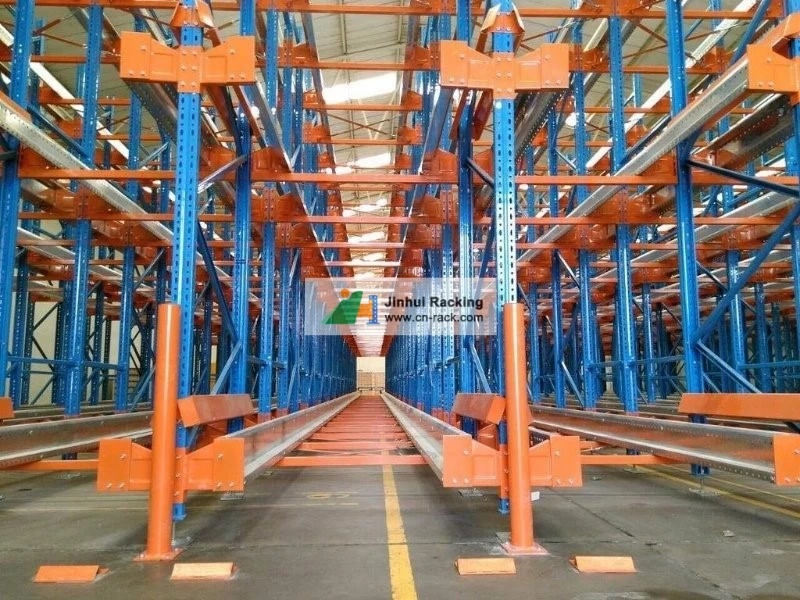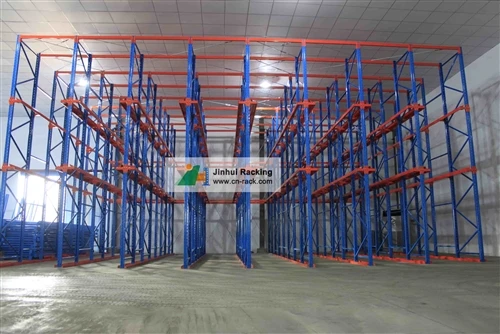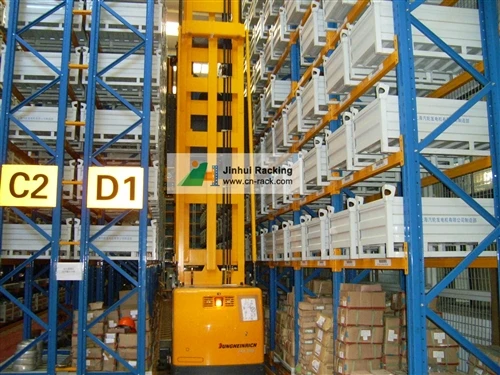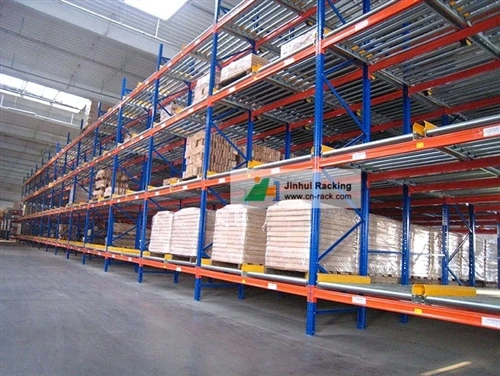

Hey everyone, it's Jake from the shuttle racking team here – let's cut to the chase, if you're running a warehouse with radio shuttle racking (RS racking) you know that inventory counting can feel like herding cats. One wrong move with the shuttles, a mis-scanned pallet, or even a tiny software blip and suddenly your stock numbers are off, costing you time, money, and sleep. As someone who's been supplying automated storage solutions for over 10 years now, I've seen my fair share of counting disasters (and wins) with systems like our Warehouse Shuttle System, so let's talk about how to actually nail that accuracy without pulling all-nighters.
First off, let's get one thing straight: RS racking isn't the old "count every pallet by hand" setup. It's supposed to be automated, so why are so many teams still treating it like manual racking? I've visited sites where a shuttle jammed because they skipped a weekly check, and that meant 20 pallets were sitting in a lane with no digital record. Or another where they used 10-year-old barcode scanners that couldn't pick up the labels on stacked pallets – that added up to a 12% counting error before they even adjusted the shuttle system. Let's break this down into actionable, real-world steps, no corporate jargon.
Start with the basics: calibrate your radio shuttles like you would calibrate a scale. I know, I know – "we calibrate it once when we install it." But here's the thing: shuttles move hundreds of pallets a day, they run on rechargeable batteries that get wonky over time, and even the warehouse floor settling a tiny bit can throw their height or positioning off. Last quarter, we worked with a client in Atlanta who was counting 8 hours every night and still missing 50+ SKUs a week. Turned out their shuttles were off by 1.2 inches in 3 lanes – enough that the scanners mounted on the shuttles couldn't read the pallet barcodes. Once they did a quick calibration (takes 20 minutes per lane, max), their count time dropped to 2 hours and errors were down to less than 0.5%. If you need the official specs or a walkthrough, check out our Shuttle Pallet Racking System page for maintenance tips tailored to this exact task. Pro tip: do a lane calibration at the start of every shift if you're running high-throughput goods, not just once a month.
Next up, stop relying on just barcode scans – use the shuttle's own data, not just your WMS. I see so many teams treat the WMS (Warehouse Management System) as the gospel, but the WMS only knows what you tell it. The radio shuttle is actually moving pallets, so it has its own built-in log of every load: which lane it was dropped into, when, how much it weighed, even if it was stacked correctly. One client in Chicago was using their WMS count alone, and it said they had 120 pallets of frozen pizza in Lane 7 – but the shuttle's log showed it only dropped 95 there, and the rest were misrouted to Lane 8 because of a bad Wi-Fi signal. That's a counting error caused by ignoring the shuttle's own data. We helped them integrate the shuttle's real-time logs with their WMS, and now every count cross-references the two, so misrouted pallets are caught instantly. If you're looking for a system that's designed to sync smoothly, our Automatic Storage Radio Pallet Shuttle Racking System is built with that integration front and center – no clunky third-party tools needed.
Don't sleep on the little stuff: pallet labeling and shuttle access. Wait, you label pallets, right? But are you labeling them the same way every time? I've seen pallets where the barcode is on the front one week, the side the next, or covered in shrink wrap so it's half obscured. The shuttles' scanners are good, but they're not mind readers. Another common issue: some teams block shuttle access points with empty pallets or overstock, so the shuttle can't move to a spot to update its log, leading to missing entries. That's a simple fix – mark clear access zones with floor tape, and train your pickers to never leave anything blocking the shuttle's path. We've got a whole section on best practices for labeling and shuttle upkeep on our Smart Automated Warehouse Storage page, if you need a quick cheat sheet for your team.
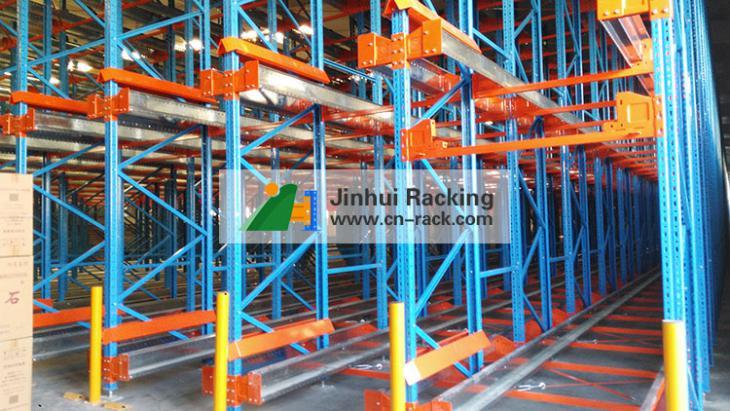
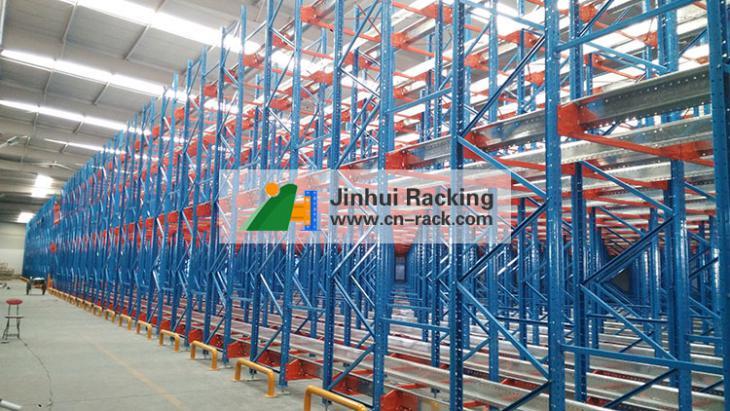
Here's a bigger one: do spot counts instead of full cycle counts, and use the shuttle to make it easier. Full cycle counts mean you stop operations for a day to count every single pallet – that's a pain, and usually when errors happen because everyone's rushing. Spot counts mean you pick a random lane, pull the shuttle, and count the pallets there, cross-referencing with the shuttle's log. Since the shuttle is already moving, why not use it to do the work for you? I had a client in Dallas who used to do full counts every month, costing them $15k in lost productivity every time. Now they do 2 spot counts a week – one for fast-moving SKUs, one for slow – and that's enough to catch discrepancies early. The shuttle even creates a digital log of the spot count automatically, so you don't have to enter numbers manually. No more human error from writing down wrong counts.
Wait, let's talk about Wi-Fi. This is the unsung hero of RS racking accuracy. If your Wi-Fi is spotty, the shuttle can't send real-time data, so it might think a pallet is in Lane 3 when it's actually in Lane 5 – and that shows up as a count error. We had a client in Miami where their Wi-Fi signal dropped to 1 bar in the back lanes, and that caused 20% of their count errors for 3 months. They installed a couple of extra access points, and it fixed 90% of the problem immediately. You don't need super expensive industrial Wi-Fi, just make sure every lane has at least 2 bars of signal where the shuttle stops. Test it during peak hours, too – not just at 2 a.m. when no one's using it. A quick Wi-Fi audit takes an hour, and saves you hours of counting headaches.
Now, let's address the elephant in the room: software updates. I know, updating system software is the worst, it means downtime, and it feels like it's never important. But outdated shuttle software can cause all sorts of glitches that throw count numbers off. Last year, we had a client who skipped 3 software updates for their shuttle system, and it started misreporting pallet weights – which made the WMS think a pallet was empty when it was actually full, leading to "missing" inventory. A 30-minute software update fixed it. We always remind clients that our systems get automatic update alerts via email, and they can schedule them during slow hours – no need to shut down for the whole day. If you're using our equipment, you can check out our Shuttle Racking High Performance Warehouse Storage Racks page for info on how to set up updates and troubleshooting.
Let me wrap this up with a real example that stuck with me. A client in Detroit was counting their RS racking system and getting 8-10% errors every month, which was costing them thousands in overstocked items (wasted storage fees) and stockouts (lost sales). They tried everything: new scanners, manual counts, extra staff. Finally, they did all the things we talked about: calibrated the shuttles, updated their WMS to sync with shuttle logs, fixed their Wi-Fi, and started doing spot counts instead of full cycles. Within two months, their count errors were down to 0.3%, and they saved $22k in the first quarter alone from reduced overstock and stockouts. That's not some magic fix – that's using the system you already have correctly.
Look, radio shuttle racking is supposed to make inventory management easier, not harder. The biggest mistake teams make is treating it like a regular manual racking system, when it's an automated tool that has all the data you need built right in. You don't have to reinvent the wheel – just take a little time to tune up the little parts, sync the data, and use the tools the system already gives you.
If you're thinking about upgrading your current RS racking or need help optimizing the system you already have, our team is here to walk you through every step. We've worked with warehouses of all sizes, from small 10,000 sq ft setups to massive distribution centers, so we know what works in real, busy environments. Don't let bad counting turn your automated system into a headache – reach out to our team to talk through what's going on with your setup, and we can point you to the right solutions, whether that's a quick tune-up or a full system that fits your needs.
REFERENCES:
- Warehouse Education and Research Council. (2022). Automated Storage and Retrieval Systems (AS/RS) Accuracy and Operational Efficiency Report. WERC Press.
- Material Handling Industry Association. (2023). Best Practices for Radio Shuttle Racking Maintenance and Inventory Reconciliation. MHIA Technical Bulletin.
- Global Logistics Supply Chain Council. (2021). Common Error Points in Automated Warehouse Inventory Counting and Mitigation Strategies. GL SCC Journal.