
If you've ever walked through a bustling industrial warehouse, watched forklifts weave between towering storage units, or spent hours troubleshooting slow-moving stock deliveries, you've probably wondered: why do those aisles look so specific? As an industrial warehouse racking supplier who's spent a decade working with 3PLs, e-commerce fulfillment centers, and manufacturing facilities across North America, this question is one I get asked weekly-alongside, "What's the actual standard width for these aisles?" The short answer is there's no one-size-fits-all number, but there are science-backed rules that balance safety, efficiency, and cost. Let's break it down, because skimping on aisle width isn't just a small mistake-it can derail your entire warehouse operation.
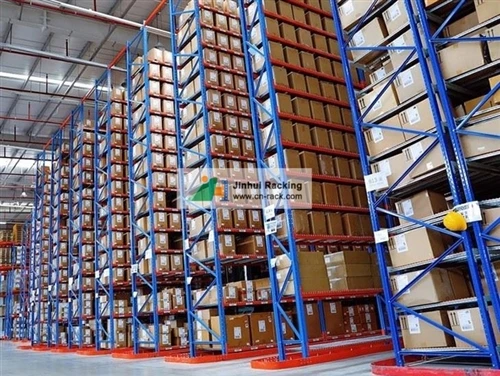
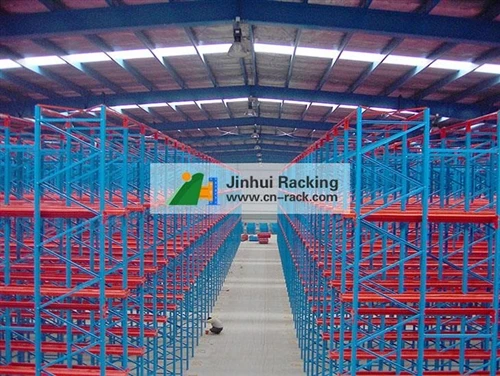
First, it's critical to understand that warehouse racking aisles aren't random gaps. They're designed for the material handling equipment (MHE) that moves in and out of your storage. The core rule here is: the aisle has to be wide enough for your largest, most frequent MHE to turn fully, unload pallets, and maneuver without hitting racking, walls, or other equipment. That makes sense, right? But many warehouse managers mix up "minimum safe width" with "standard width," which is where confusion starts. Let's start with the most common setup: static pallet racking, which is the workhorse of most industrial spaces. For a long time, the de facto standard aisle width for static pallet racking was 10 to 12 feet. But that's changing, and it's tied directly to the size and type of forklift you use. A standard sit-down counterbalance forklift, the most common workhorse for general pallet storage, needs a minimum of 9.5 feet of aisle width to turn and retrieve a 48x40-inch pallet without issues. But if you're using a narrow-aisle (NA) reach truck, which is designed for tight spaces and higher racking heights, that number drops to just 6 to 8 feet. That's a huge difference-enough to add thousands of square feet of storage space in a large warehouse if you optimize correctly.
Of course, static pallet racking isn't the only storage solution out there, and aisle standards shift dramatically when you switch to other systems. Take heavy-duty storage drawer racking industrial mold rack system, for example, which is built for oversized, heavy items like manufacturing molds or industrial machinery parts. These units are often much heavier and more bulky than standard pallets, and the MHE that services them-like large capacity forklifts or even cranes-needs way more clearance. For these systems, standard aisle widths jump to 12 to 15 feet. Why? Because a mold can weigh 10,000 pounds or more, and the forklift used to move it needs extra space to position the forks under the mold's base, avoid scraping the racking frame, and stop safely even with a heavy load. I've seen warehouses try to squeeze a mold rack aisle down to 10 feet to save space, and within six months, they'd had three forklift collisions that bent racking frames and dented molds-costing them upwards of $50,000 in repairs and lost production time. That's the kind of short-sighted mistake aisle standards are meant to prevent.
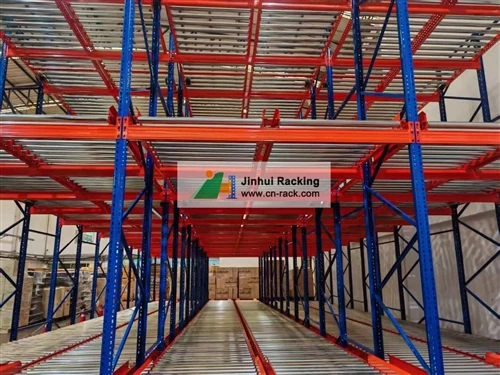
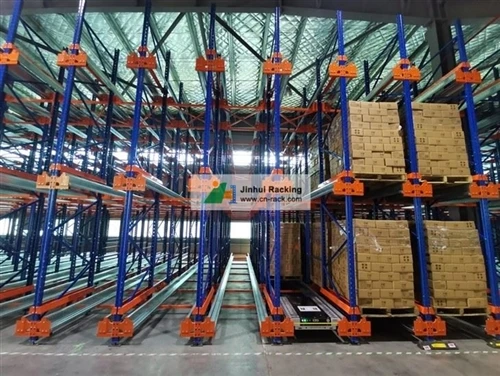
Another big category that's transforming warehouse layout is motorized mobile racking systems. Unlike static racking, which has fixed aisles, mobile racks move along rails, so you only need one narrow aisle that shifts to access different storage bays. The standard aisle width here is drastically smaller-usually just 3 to 5 feet. But it's important to note that this width is only for the aisle itself, not the overall layout of the system. When the mobile racks are closed, they sit side-by-side, so the total space saved is enormous compared to static systems. For example, a warehouse with 10,000 square feet of storage space using static racking might have to allocate 30% of that space to aisles, but a motorized system cuts that to 10% or less. That's why more and more facilities are turning to new design motorized mobile racks system railed racking pallet racking storage rack warehouse rack with high load-bearing for high-density storage, especially for SKUs that don't need frequent access. But even with these systems, there are strict safety standards for that narrow aisle-they have automatic stop mechanisms, motion sensors, and load capacity rules that mean you can't just make the aisle any smaller than 3 feet, regardless of the equipment.
Now, let's talk about the standards that formalize these numbers. There are two key organizations that set the guidelines for industrial racking and aisle width in the U.S.: the Occupational Safety and Health Administration (OSHA) and the Material Handling Industry (MHI). OSHA's requirements are non-negotiable minimums, focused on safety: they state that aisles must be wide enough to prevent collisions, allow for safe movement of MHE, and provide clear egress in case of emergencies. MHI, on the other hand, sets industry best practices that are widely accepted as the de facto "standard width" for different systems, because they account for efficiency, not just safety. For example, MHI's Industrial Racking Standard (ANSI MH16.1) recommends that for standard counterbalance forklifts, the aisle width for static pallet racking is a minimum of 10 feet, but for reach trucks, it's 7 feet-numbers that align with the real-world testing our team does every day.
But here's what most warehouse managers don't realize: the "standard" width also depends on your pallet size, load weight, and racking height. A standard GMA pallet (48x40 inches) is the most common in North America, but if you store European pallets (1200x800 mm) or oversized pallets (54x48 inches), your aisle width needs to adjust. For an oversized pallet, a counterbalance forklift might need an extra 6 to 12 inches of clearance to turn, pushing the standard aisle width from 10 feet to 11 feet. Load weight matters too: a 2,000-pound pallet of retail goods moves differently than an 8,000-pound pallet of raw steel, so the forklift's turning radius is larger, requiring wider aisles. Racking height is another factor-taller racking (over 30 feet) usually uses reach trucks or very narrow-aisle turret trucks, which can operate in aisles as small as 5 feet, so if you're planning a high-bay warehouse, you can get away with much narrower aisles than a low-bay (under 20 feet) facility that uses sit-down forklifts.
Over the years, our team has worked with hundreds of warehouses to optimize their aisle widths, and we've seen common mistakes that lead to avoidable costs. One client was a mid-sized e-commerce fulfillment center that used industrial heavy duty rack manufacturing pallet rack logistics equipment factory warehouse storage racks heavy duty racking for their SKUs. They initially went with an 8-foot aisle to save space, thinking their reach trucks could handle it. But within a month, they were having 2-3 collisions a week because their part-time operators weren't trained to work in such tight spaces, and the load lights on the trucks didn't account for the extra 6 inches needed for slightly oversized shipping pallets. We worked with them to adjust their aisle width to 7.5 feet (a small 6-inch change that aligned with MHI standards for their truck model), installed collision guards on the racking, and reduced their incidents to zero. That small adjustment saved them over $20,000 a year in repair costs and downtime.
Another common mistake is mixing MHE types in the same warehouse. Some warehouses have both counterbalance forklifts and reach trucks, which means you have to set your aisle width to accommodate the larger, less maneuverable equipment. That might mean a 10-foot standard aisle for areas used by counterbalance trucks, and a 7-foot narrow aisle for reach trucks in a different section, separated by safety gates. It's not ideal, but it's necessary to avoid forcing operators to make unsafe compromises.
Now, let's get into how to calculate the right aisle width for your specific space, because the "standard" is just a baseline, not a one-size-fits-all number. Step one: identify all the MHE you use, from the smallest hand pallet truck to the largest counterbalance forklift. Get their turning radius specifications from the manufacturer-this is the single most important number. Step two: measure your pallet size, including any overhang or load extensions, because a pallet that sticks out 6 inches on each side needs extra clearance. Step three: add a safety margin. Most experts recommend 10-15% extra width beyond the minimum turning radius, to account for operator error, uneven warehouse floors, and any unexpected obstacles. For example, if your reach truck has a 6.5-foot turning radius, add 0.65-0.975 feet, pushing your standard aisle width to 7.1-7.5 feet, which matches the MHI recommendations.
As an industrial racking supplier, I can tell you that the trend in recent years is toward optimizing aisle width to balance space and efficiency. With the rise of e-commerce and high real estate costs, every square foot of warehouse space is valuable, so more facilities are investing in narrow-aisle equipment and optimized layouts instead of sticking to the old 12-foot standard that was common 20 years ago. But that doesn't mean cutting corners on safety. Aisle width isn't just a number on a blueprint-it's a critical part of warehouse safety, employee training, and long-term profitability. A few extra inches of aisle space might feel like a waste, but a single forklift collision can cost you weeks of downtime, thousands in repairs, and even OSHA fines if it's found to be a safety violation.
If you're planning a new warehouse layout or reconfiguring an existing one, it's worth working with a racking expert (like our team, who has designed layouts for everything from small retail warehouses to large manufacturing facilities) to calculate your exact aisle width. We can walk you through choosing the right system-whether that's static pallet racking, heavy-duty storage for your molds and oversized parts, or motorized mobile racks for high-density storage-and make sure your aisles meet both OSHA safety rules and MHI best practices. No two warehouses are the same, so there's no universal "standard width" that works for everyone, but there is a right width for your specific equipment, products, and operations.


At the end of the day, warehouse success comes down to moving stock efficiently and safely, and aisle width is a foundational part of that. It's easy to see aisles as just gaps between racks, but they're the arteries of your operation-too narrow, and you'll suffer from bottlenecks, collisions, and lost productivity; too wide, and you're wasting valuable space that could be used for more storage. If you're unsure what the right aisle width is for your facility, or you're looking to upgrade your racking system to optimize your layout, feel free to reach out. Our team has the expertise to help you design a space that works for your unique needs, balancing safety, efficiency, and cost.
References
- Material Handling Industry (MHI). (2020). ANSI MH16.1: Specification for the Design, Testing, and Utilization of Industrial Steel Storage Racks.
- Occupational Safety and Health Administration (OSHA). (2022). Warehouse Safety Guidelines: Material Handling Equipment and Aisle Safety.
- Modern Material Handling. (2023). "Aisle Width Optimization: Balancing Space, Safety, and Efficiency in Industrial Warehouses."