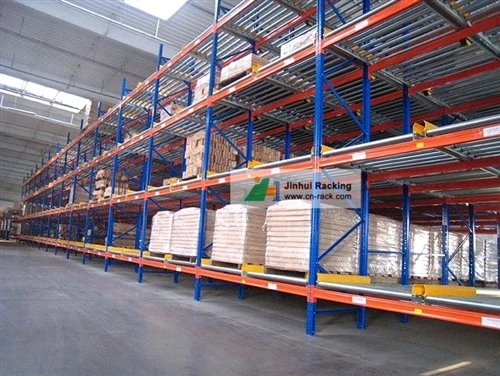

If you've ever walked into a warehouse storing bulk pallets-say, canned goods, frozen produce, or big bags of dry ingredients-chances are the stuff holding all that heavy inventory up is drive in racking. I've been supplying these systems for years, and the number one question I get from new warehouse managers is always the same: "What are these things even made of? It looks like metal, but what kind? And why does it matter more than just picking whatever's cheapest?"
Fair question, honestly. The materials in drive in racking aren't just random-they're picked specifically to handle super heavy loads, get pushed around by forklifts all day, and stand up to whatever a warehouse can throw at 'em (including cold rooms that dip below freezing, which we'll get to later). Let's break down the main stuff, the why behind each choice, and where the links I've got to our actual products fit in.
First off, the big one: steel. Most drive in racking you'll see is steel, and not just any steel-we use high-tensile carbon steel for nearly all our standard units. Wait, let me explain that. High-tensile steel is way stronger than regular steel, which is non-negotiable for drive in racking. Unlike selective pallet racking where each pallet slot is separate, drive in racking has forklifts driving straight into the system, meaning every beam and upright has to support multiple pallets in a single line. Think about it: a single line might hold 10 pallets, each 1,500 to 2,000 pounds-that's 15,000 to 20,000 pounds per line, and that stress has to go somewhere. High-tensile carbon steel handles that without bending, which is a must-you don't want a beam snapping mid-shift and sending pallets crashing down.
We also coat that steel for two big reasons: rust and wear. Standard warehouse environments are humid sometimes, but if you're in a cold room (which a lot of our customers are, because drive in racking is perfect for FIFO or LIFO inventory there), moisture plus cold is a recipe for rust if you skip a good coating. We use two main coatings here: powder coating for most standard dry warehouses, and hot-dip galvanizing for outdoor or extra-humid spots like loading docks where salt air or rain might hit. Powder coating is durable, comes in different colors to match your warehouse branding, and holds up against forklift bumps way better than regular paint. Galvanizing is basically a zinc layer that bonds to the steel, so even if it gets scratched, it won't rust from the inside out.
Now, you might have heard about drive through racking, which is a slight twist on drive in-it has openings on both ends so you can load from one side and unload from the other. That's still made of the same high-tensile steel, but we adjust the beam and upright spacing a bit to fit the dual access. If you want to check out exactly what our standard drive in and drive through racking looks like, the link is right here: Drive-In / Drive-Through Racking. We built that page to show close-ups of the steel beams, the powder coating finish, and even a forklift navigating the system so you can see the spacing that keeps everything safe.
But wait-what about those cold room systems I mentioned? A lot of food processing or frozen storage warehouses need drive in racking that works at -20°F or lower, and regular steel doesn't hold up there as well. If you take standard high-tensile carbon steel and leave it in super cold temps, it gets brittle-like, it can crack if a forklift hits it wrong, which is a total safety hazard. So for cold room and processing industrial use, we tweak the steel a little to make it cold-rolled steel with extra impact resistance. It's the same basic steel structure, but the alloy is adjusted so it stays flexible even at freezing temps. We also add a thicker layer of powder coating with extra anti-corrosive properties because cold rooms have high humidity from condensation, and that moisture eats away at steel faster than regular warehouse air.


That cold room link I mentioned earlier is here, if you want to see exactly what we build for that space: Warehouse Drive in Pallet Racking System for Cold Room and Processing Industrial. We've got install photos from a frozen vegetable warehouse in Minnesota, and a close-up of a beam bent just enough to show the strength, no cracking even after 6 months of use.
Is there any other material we use? Occasionally, for super specialized spots, but almost never. Some people ask about aluminum, but aluminum is way lighter, so it can't handle the same heavy pallet loads-if you had a line of 10 pallets of 2,000 pounds each, aluminum would bend and twist before the end of the week. We once had a customer test aluminum for a small line of light plastic pallets, but they switched back to steel after 2 months because it wasn't sturdy enough. Wood is a no-go, too-way too prone to rotting, chipping, or breaking if a forklift nicks it, plus it can't hold heavy loads. The only time we use non-steel parts is for small accessories, like plastic safety clips to keep pallets from sliding off beams, or nylon end caps on uprights to keep forklifts from scratching the steel. Those parts are super cheap to replace if they get damaged, way easier than swapping a whole beam.
A quick side note: a lot of people confuse drive in racking with pallet flow racking, but that's a different system-flow has rollers, which need different materials, but drive in is all about that steel structure built for driving forklifts through. The materials choice here is all about balance: we want it strong enough to hold heavy loads, flexible enough to handle bumps from forklifts, corrosion-resistant enough to last 10+ years, and not so heavy that it's a pain to install. We test every single batch of steel we get, too-before it even leaves our warehouse, we run load tests to make sure it can hold twice the maximum rated weight, just to be safe. That's not overkill, that's standard for this kind of industrial gear-if your racking fails, you're not just losing inventory, you're hurting your workers, which is a risk we won't take.
Wait, another common question: does the thickness of the steel matter? Yeah, a lot. Our standard uprights are 3mm thick, which is thicker than the 2mm stuff you might get from no-name suppliers. The beams are 2mm to 2.5mm, depending on the load rating. Thinner steel might be cheaper upfront, but it'll bend after a year, and then you're stuck replacing half the racking on top of dealing with the hassle of damaged inventory. I've seen that happen to a local snack warehouse a few years ago-they went with the cheapest racking they could find, and within 18 months, 12 beams bent, leading to 3 pallets of chips breaking and 2 forklift dents that cost thousands in repairs. That's the kind of mistake you don't want to make.
Also, the way we weld the pieces together matters, and that's part of the material choice too. We use robotic welding for all the connections between beams and uprights, which is consistent every single time. No hand-welded spots that are weak or messy. That's why the high-tensile steel works so well with our welding process-strong steel plus strong welds equals a system that lasts.
So to wrap this up, the main material for drive in racking is high-tensile carbon steel, with cold-rolled alloy variants for cold rooms, coated for rust and wear, with tiny plastic and nylon accessories for safety. If you're looking to upgrade your warehouse, or set up a new space, checking out those two links I mentioned will show you exactly how those materials come together to keep your inventory safe and your forklifts moving. I get it-buying industrial equipment can feel overwhelming, especially with all the jargon about steel grades and coatings, but the bottom line is this: the right materials will save you money in the long run, and keep your operations running smoothly.
If you've got questions about what kind of drive in racking works for your space, or want to talk through load requirements, just reach out-we can walk you through all the material specs, no sales pitch, just straight answers. Don't waste time on flimsy racking that'll break down in a year; invest in something built to last.
References
- Warehouse Equipment Manufacturers Association. (2022). Material Specifications for Industrial Pallet Racking. WEMA Technical Bulletin.
- National Safety Council. (2021). Safety Standards for Drive-In Racking Systems. NSC Industrial Safety Guidelines.
- American Galvanizers Association. (2020). Corrosion Resistance of Steel Rack Coatings. AGA Material Performance Report.