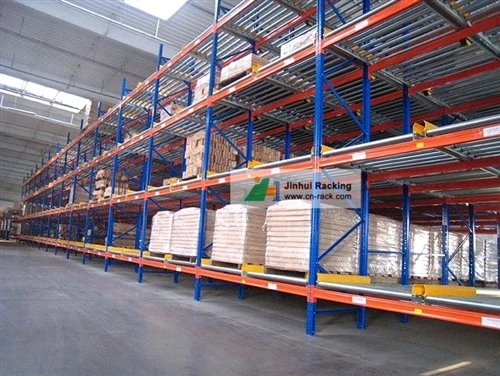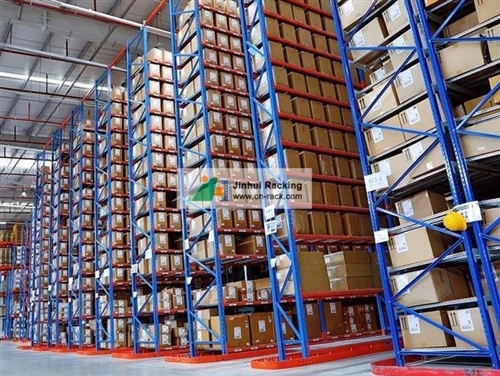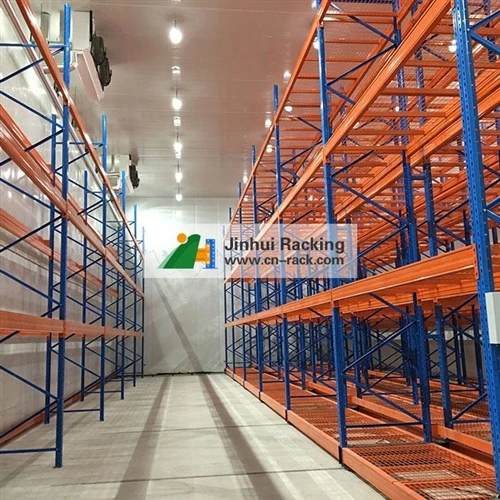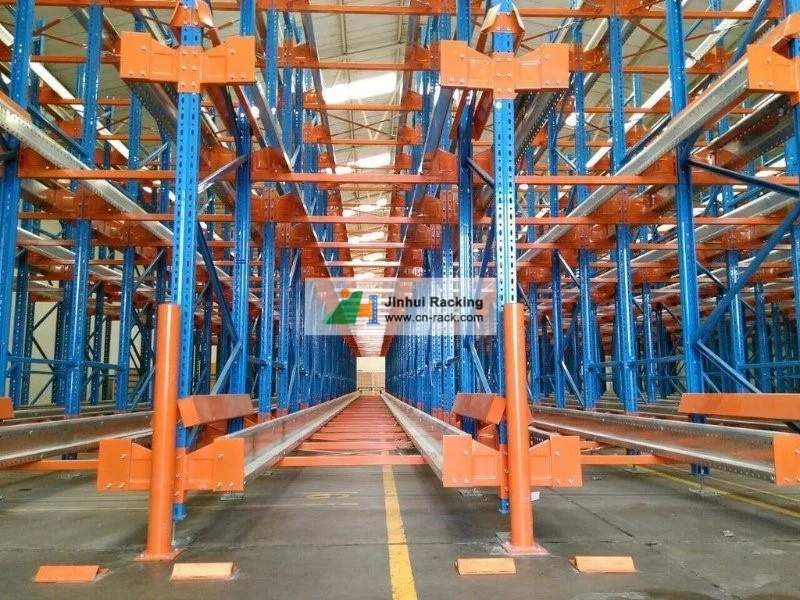

If you're running a warehouse or distribution center looking to maximize storage space without compromising accessibility, mobile pallet racking is one of the most effective solutions on the market. As a supplier of heavy-duty mobile storage systems, I've worked with hundreds of operations that either overestimate or underestimate the capacity of these racking units, leading to wasted space, unnecessary costs, or even safety risks. The good news is that calculating mobile pallet racking storage capacity doesn't have to be complicated-if you follow a structured, science-backed process that accounts for both physical dimensions and practical usage needs. Let's break down exactly how to do it, and why working with a reliable supplier (like us) can make the calculation process smoother.
First, let's start with a quick overview of what mobile pallet racking is, for anyone new to the space. Unlike traditional static pallet racks, which have fixed aisles between every row, mobile pallet racks sit on a motorized or manually operated base that moves along rails installed in your warehouse floor. This means you only need one narrow aisle between the rows you're currently accessing, freeing up 50-70% more floor space overall. That space savings is the biggest draw, but it only translates to usable storage if you calculate capacity correctly. Before diving into numbers, it's worth noting that not all mobile racking is the same. For heavy-duty applications (like storing pallets of inventory, boxes, or bulk goods), options like the Automatic Heavy Duty Electric Mobile Pallet Storage Racking System are designed to handle higher weight limits and more frequent use than lighter-duty units. If you're storing heavy loads, starting with the right type of racking is a critical first step in accurate capacity calculation.
Now, let's get to the core: calculating storage capacity. The process breaks down into three key steps: calculating the number of usable pallet positions, accounting for weight limits, and adjusting for real-world operational needs. Let's go through each one in detail.
Step 1: Calculate Usable Pallet Positions per Racking Unit
The most basic part of capacity is how many pallets you can fit into a single mobile racking unit. Unlike static racks, where aisle space is fixed, mobile racking's footprint is the area of the rail system plus the length of the rack rows that move. To start, measure your warehouse's available floor space where you plan to install the mobile racking. You'll need to account for three things here: the total length of the rails, the height of the ceiling (and any overhead obstacles like sprinklers or lighting), and the width of your standard pallets.
First, pallet dimensions. Most standard pallets are 48 inches long by 40 inches wide, but many industries use custom sizes-e-commerce might use smaller pallets, while food and beverage might use larger ones. For accurate calculation, use the exact dimensions of the pallets you actually use, not industry averages. Once you have pallet size, measure the inner depth of your mobile racking beams. The inner depth is the space between the front and back beams of a single rack level. If your pallet is 48 inches long, the rack depth should be at least 48 inches to fit the pallet with a small gap (we recommend 2 inches on each side to make loading and unloading easier without damaging the rack or pallet).
Next, calculate how many pallets fit along the length of a single rack row. A mobile racking unit typically has multiple rows that slide along the rails; when closed, they form a continuous storage bank. For example, if a row is 20 feet long, and each pallet takes up 48 inches (4 feet) of linear space along the beam, you can fit 5 pallets per level in that row. Most mobile pallet racks have at least 2 levels (ground level and an upper level), though heavy-duty models like the Easy Operation Motorized Mobile Racking System can have 3 or 4 levels for taller warehouses-just make sure to check the rack's weight rating for upper levels.
Wait, but it's not just linear length. You also have to account for the aisle space that's integrated into the mobile system. When calculating the total number of rows, remember that each movement between rows creates a single aisle. For example, if you have 5 rack rows, you'll have 4 aisles that open up as needed, instead of 4 separate aisles like you would with static racks. That means your total storage bank footprint is much smaller. Let's do a quick example to make this concrete: a 50-foot long warehouse section, static racks might need 4 aisles (each 10 feet wide) so total storage length is 50 - (4*10) = 10 feet, plus the space for the racks themselves. With mobile racking, the total footprint is 50 feet (since you only need one 4-foot aisle that moves between rows), so total storage length is 46 feet- that's a 360% increase in linear storage space. Now, multiply that linear space by the number of levels, and you get the total pallet positions.
Step 2: Factor in Weight Capacity to Avoid Overloading
Number of pallet positions isn't the only part of capacity-you also can't forget weight limits, which are non-negotiable for safety and structural integrity. Mobile pallet racks are designed to support specific maximum loads per pallet, per level, and per entire row. If you overload a row, you risk bending the beams, damaging the motor system, or even causing a collapse that could hurt workers or destroy inventory.
Heavy-duty mobile racking systems, like the Motorized Mobile Racking System built for safety, typically have a per-pallet weight limit of 2,000 to 5,000 pounds, depending on the level and material of the rack. To calculate total capacity, add up the weight of all pallets you plan to store, not just the number of positions. For example, if you have 100 pallet positions, each holding a 3,000-pound pallet, total weight is 300,000 pounds. If your mobile rack's total weight limit for a single row is 250,000 pounds, you'll need to reduce the number of pallets in that row, or split the weight across additional rows.
It's also important to note that weight limits are not universal across all parts of the rack. The ground level beams can usually support more weight than upper levels, since weight is distributed downward. So if you're storing heavier goods, keep them on the ground levels, and lighter goods on upper levels. Our team often helps customers adjust their layout to maximize weight capacity without overloading any part of the rack-for example, placing fast-moving heavy items on the ground level closest to the aisle for easy access, while slow-moving light items go on upper levels.
Step 3: Adjust for Operational Needs (Not Just Theoretical Capacity)
Here's where many businesses go wrong: they calculate theoretical maximum capacity, but forget about how they actually use the warehouse. A rack that fits 100 pallets in theory is only 80% usable if you can't easily access the pallets you need without moving 10 other pallets out of the way. That's why the best capacity calculation accounts for your inventory turnover rate.
If you have fast-moving inventory, you'll need more frequently accessed aisles. Mobile racking lets you adjust how many aisles you have, but every extra aisle reduces total storage space. For example, if 30% of your inventory turns over monthly, adding a second dedicated aisle (instead of using one that moves) will make picking faster, but it will reduce total pallet positions by about 15%. That's a trade-off between space efficiency and accessibility, and it's important to factor that into your calculation.
Also, don't forget to account for loading and unloading clearance. Forklift operators need at least 3 feet of clearance on each side of the pallet to safely load it into the rack. If you don't leave that clearance, you're at risk of pallets being damaged, or even forklifts hitting the rack structure. When calculating pallet positions, leave at least 2 inches of gap between pallets on the same beam, and 3 feet of clearance along the aisle way.
Common Mistakes to Avoid When Calculating Mobile Pallet Racking Capacity
After working with so many customers, I've seen the same mistakes trip people up time and time again. First, underestimating pallet size. If you use a 48x40 pallet but calculate for a 42x42 pallet, you'll end up with pallets that don't fit, and wasted space. Second, ignoring overhead obstructions. If your warehouse has a sprinkler system that only allows 15 feet of clearance, you can't use a 20-foot tall rack, no matter how many pallet positions it promises. Third, forgetting to account for the weight of the pallet itself. Wood pallets weigh 30-50 pounds each, so if you're calculating a 3,000-pound load, don't forget to subtract the pallet weight to get to the net weight of your goods.
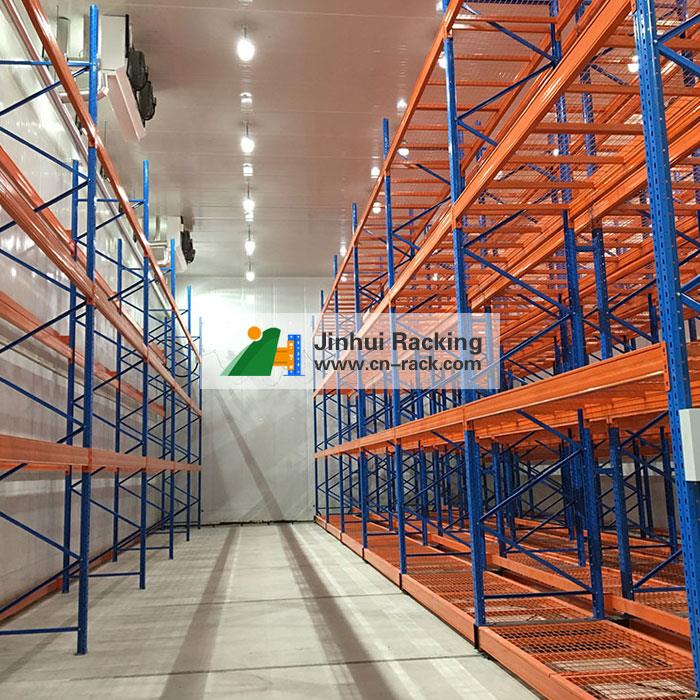
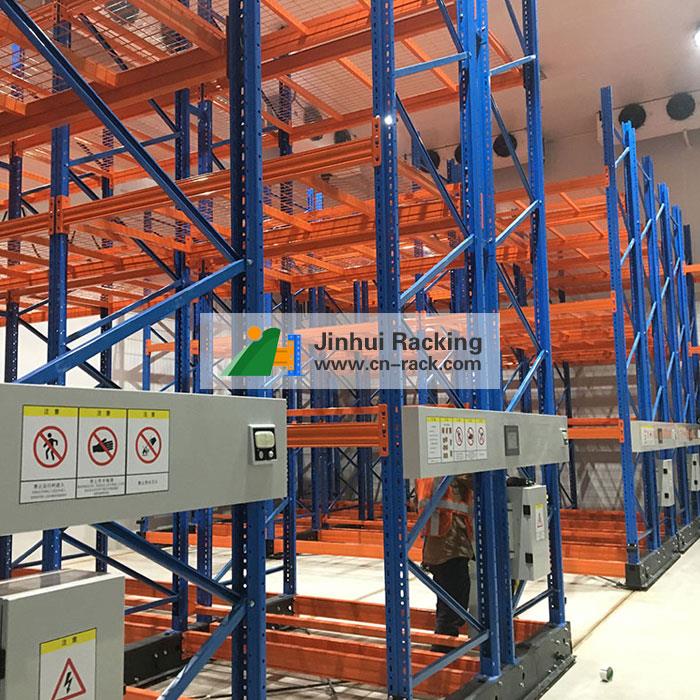
Another common mistake is choosing the wrong type of mobile racking. For example, a manually operated mobile rack might have a lower weight limit than an electric one, so if you're storing heavy pallets, a manual system will not deliver the capacity you need. That's why options like the Automatic Heavy Duty Electric Mobile Pallet Storage Racking System are worth the investment for high-capacity operations-they're engineered to handle heavy loads over long periods, so your capacity calculations will be accurate for years, not just a few months.
How Suppliers Can Help With Capacity Calculation
If all this feels a bit overwhelming, that's where a reputable mobile pallet racking supplier comes in. We don't just sell racking-we help you calculate exactly how much capacity you need, based on your specific warehouse, inventory, and operational needs. Our team will measure your floor space, assess your pallet sizes, and review your inventory turnover to create a custom capacity plan that maximizes space without compromising safety. For example, we'll recommend whether an Easy Operation Motorized Mobile Racking System is right for your needs, or if a heavier-duty model will serve you better long-term.
To make the process even easier, we provide detailed data for every racking system we sell, including weight limits per level, linear capacity, and recommended layout adjustments. We also work with you to factor in future growth-if you plan to add inventory in the next 2-3 years, our capacity calculations can account for that, so you won't have to re-install new racking sooner than expected.
In the end, calculating mobile pallet racking capacity is about balancing three things: physical space, structural limits, and how you actually run your warehouse. Skip the generic calculations, take the time to measure your exact needs, and work with a supplier that understands both the engineering of mobile racking and the needs of warehouse operations. If you're ready to get started, we'd be happy to walk through your project, answer questions about any of our systems, and help you create a storage plan that fits your goals.
References
- Material Handling Industry of America. (2022). Mobile Pallet Racking: Design, Safety, and Capacity Guidelines. MHIA Press.
- Rack Manufacturers Institute. (2021). National Standard for Pallet Racking Systems. RMI.
- Warehouse Education and Research Council. (2023). Space Optimization in Modern Warehouses: Mobile Racking Case Studies. WERC.
- OSHA. (2022). Safety Guidelines for Mobile Racking Installations and Operations. Occupational Safety and Health Administration.
- Gartner Supply Chain. (2023). 2023 Warehouse Space Efficiency Report: Mobile Racking Adoption and Capacity Metrics. Gartner Inc.