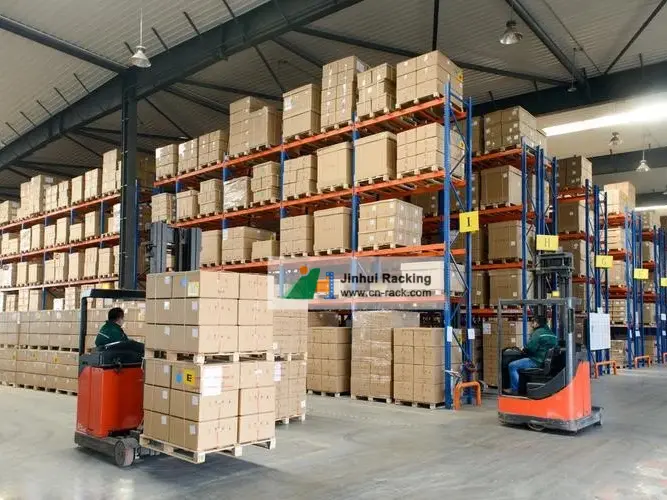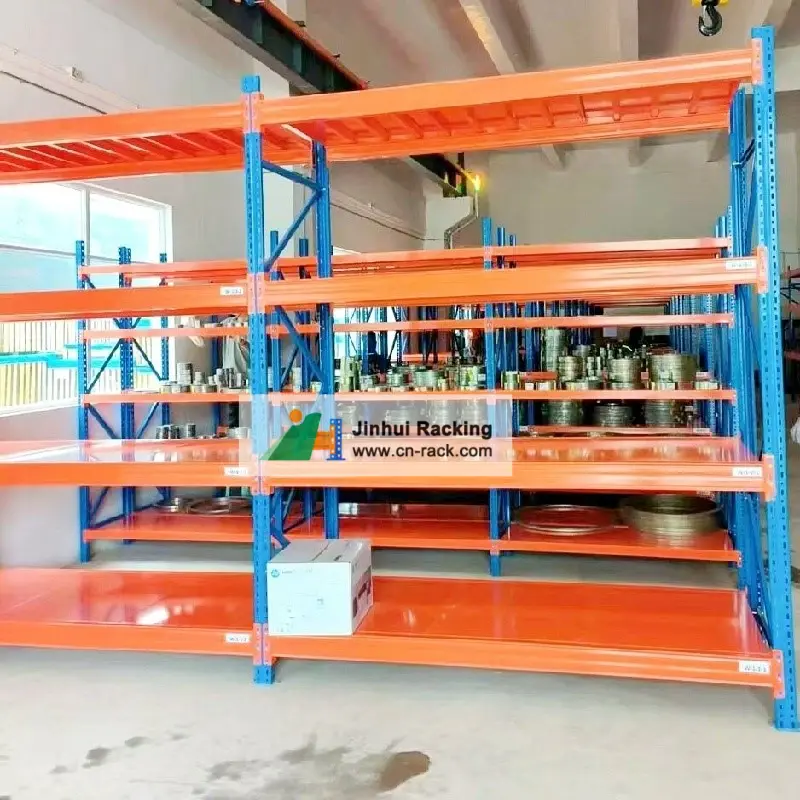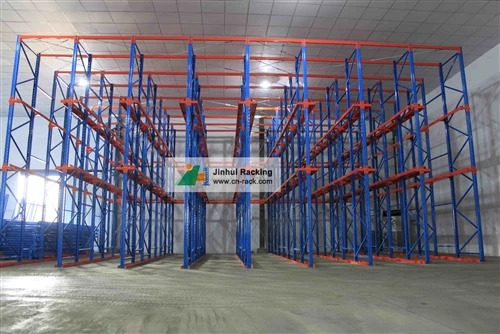

If you've ever walked through a busy warehouse, you've probably stared at those grid-like structures holding everything from raw materials to finished pallets-those are pallet racks. But when you're ready to upgrade your storage, the first big question is usually: single-deep vs. double-deep custom pallet racking. As a custom pallet racking supplier who's helped dozens of warehouses fix their storage pain points, I get asked this all the time. It's not just about picking a style-it's about matching it to your space, your forklift setup, and what you actually store. Let's break this down like we're chatting over coffee, no boring industry jargon (well, maybe a little, but I'll keep it real).
First, let's start with the basics so we're all on the same page. Single-deep racking is the classic, go-to option most people picture. Each pallet sits in its own separate lane, right up next to the next pallet, with space to pull one pallet out at a time without moving others. Think of it like a row of mailboxes-each has its own door, no overlapping. Double-deep, on the other hand, is like stacking two mailboxes back to back. Two pallets sit behind each other in a single lane, so you only need half as many aisles. That's the big hook, but there's way more to it than just aisle size.
Let's talk space, because that's the main reason most warehouses upgrade to custom racking. If your warehouse is crammed, like many we work with, you're probably staring at unused vertical space or wasting floor space on wide aisles. Single-deep works great if you have lots of SKUs that you access individually, or if you need to pick pallets quickly without moving extra stock. But it's not the best if you're limited on floor space. Double-deep cuts aisle width by about 30-40% compared to single-deep, which means you can fit almost twice as many pallets in the same footprint. That's a game-changer if you have a small warehouse or want to expand without adding square footage. But here's the catch: you can't access every pallet individually in double-deep. To get to the pallet at the back of the lane, you have to pull the front one out first. That's called LIFO-last in, first out-while single-deep is FIFO, or first in, first out. I've seen this make or break a business. If you're storing perishables or items with expiration dates, FIFO is non-negotiable. If you're storing things that don't go bad, like building materials or large machinery parts, LIFO is totally fine-double-deep might save you the space you need.
Next up, forklift requirements, because your racking is only as good as the equipment that moves pallets in and out. Single-deep is compatible with almost every type of forklift-counterbalance, reach, pallet jacks, even narrow-aisle forklifts. It's straightforward: you drive the forklift right up to the single-deep lane, grab the pallet, and go. No fancy moves needed. Double-deep? It needs a reach forklift, specifically one with a long mast that can extend into the back of the lane to grab the second pallet. Not every forklift can do that, and if your team is used to driving counterbalance forklifts, switching to a reach truck will mean training, which adds time and cost. I've had customers come to us thinking double-deep is a no-brainer, only to realize their current forklift can't handle it-so we end up modifying their single-deep setup or helping them upgrade their equipment along with their racking. That's why when we build custom pallet racking, we always ask about forklift specs first-no sense designing a rack that won't work with what you already have.
Capacity and load distribution are another big one, and this is where it helps to look at options tailored to your needs. Single-deep racks are built to hold one pallet deep, so each beam is sized for a single unit, and the load is spread out across the entire lane. That makes them great for heavy pallets-like full drums of chemicals or large boxes of hardware-because the weight is evenly supported. Double-deep racks have to handle two pallets stacked back to back, so the beams are reinforced to hold that extra weight. But the load limit per lane is slightly lower than two single-deep lanes would be? Wait, no-actually, let me correct that: two pallets in double-deep can hold about 80-90% of the total weight of two single-deep lanes, because the shared support means there's a little more stress on the beams. It's not a huge difference, but it's something to keep in mind if you're storing super heavy items. For example, if you're storing 2,000-lb pallets, double-deep might work, but if you're storing 5,000-lb pallets, single-deep is the safer bet. That's why we have different styles of custom pallet racking to match capacity needs, and even a teardrop pallet rack for quick, easy adjustments if your inventory changes often.
Wait, let's talk about picking speed and order accuracy, because that's the heart of daily warehouse operations. If your team is picking a lot of individual pallets for orders-say, an e-commerce warehouse shipping out parts all day-single-deep is way faster. Each pallet is accessible from the aisle, so you don't have to waste time moving pallets around to get to the one you need. That means less downtime, more orders picked, fewer mistakes. Double-deep, on the other hand, requires double the steps to get to the back pallet. I've had a customer who switched to double-deep and noticed their order picking time went up by 25% at first-until they adjusted their inventory to put the most popular items in the front lanes. That made a huge difference, but it's a trade-off: space for speed. If your pick rate is high, single-deep is probably the right call. If you don't need to access every pallet every day, double-deep's space savings are worth the little extra time.
Now, let's get into use cases, because that's where the rubber meets the road. I'll throw in a couple examples of customers we've worked with to make this real. Last year, we had a customer with a small cold storage warehouse-super expensive to heat, so floor space was their enemy. They stored non-perishable medical supplies that didn't have strict expiration dates, so FIFO wasn't a must. We recommended double-deep custom pallet racking, and they fit 40% more pallets in the same space, which cut their heating costs by almost 10% because they didn't need to expand their warehouse. Another customer was a food distributor, storing fresh produce that needed to rotate regularly. They needed FIFO, so single-deep was the only option. We worked with them to optimize their layout, add more aisles in high-traffic areas, and even integrated some movable accessories to speed up picking. That's the thing: it's not just the racking style-it's how you arrange it for your specific goods.
Let's also talk about cost, because I know that's a huge factor for most businesses. Single-deep racking is usually less expensive upfront. The beams are simpler, the lanes are wider, and it works with more forklifts, so you don't have to invest in new equipment. Double-deep costs a bit more because the beams are reinforced, and you might need to buy a reach forklift. But the long-term savings from space can make it worth it. If you're renting warehouse space, a smaller footprint means lower rent every month. If you're expanding, you might not have to build a new warehouse, which saves a ton of money on construction. But you have to run the numbers: calculate the upfront cost vs. the monthly savings, and also factor in the extra labor time from slower picking. For small warehouses, the space savings almost always win. For high-volume pick operations, the speed of single-deep is worth the extra cost.
Wait, I can't forget to mention maintenance, because no one wants their racking breaking down mid-shift. Single-deep racks have simpler structures, so there are fewer parts to maintain. Beams are easier to inspect, and if something goes wrong, it's usually a quick fix. Double-deep racks have more complex support systems, especially where the two lanes meet. You have to check the connections more often, because the extra weight on the beams can cause wear over time. Also, forklifts have to maneuver more carefully to reach the back pallet, so there's a higher chance of accidental damage if your team isn't trained. It's not a dealbreaker, but it's something to plan for in your maintenance budget.
Let me wrap this up with a quick breakdown so you can reference it later. Single-deep custom pallet racking is best if: you need FIFO for perishables, high pick rates, have standard forklifts, or have enough floor space. Double-deep is best if: you're short on floor space, store non-perishable items with stable inventory, have a reach forklift, and don't need to access every pallet individually.


But here's the thing: every warehouse is different. What works for one business might not work for another. That's why we don't just sell one style of racking-we work with you to figure out exactly what you need. We've installed powerful capacity use forklift warehouse storage heavy duty pallet racking systems for clients needing extra strength, helped set up new design motorized mobile racks system for high-traffic areas, and even customized teardrop pallet racks for businesses that need to adjust their layout often. All of these tie into our custom pallet racking solutions, so you don't have to settle for a one-size-fits-all option that doesn't fit your space or budget.
If you're ready to stop wasting space, slow down picking, or upgrade your warehouse storage, we're here to help. We don't just sell racks-we listen to your challenges, walk through your space, and design a solution that works for your specific needs. Whether you're a small business looking to fit more pallets or a large distributor needing high-capacity, reliable storage, we can build the custom pallet racking that's right for you. Reach out to us to start your next project, and we'll help you make the best call for your warehouse.
References
- Pallet Racking Design and Warehouse Optimization, Industry Standards Association, 2022
- Forklift Compatibility and Rack Performance, Material Handling Equipment Guide, 2023
- Space Utilization in Modern Warehouses, Logistics Management Journal, 2021
- Load Capacity and Rack Maintenance, Warehouse Safety Institute, 2022
- Custom Pallet Racking Solutions for Small and Medium Businesses, Business Storage Review, 2023