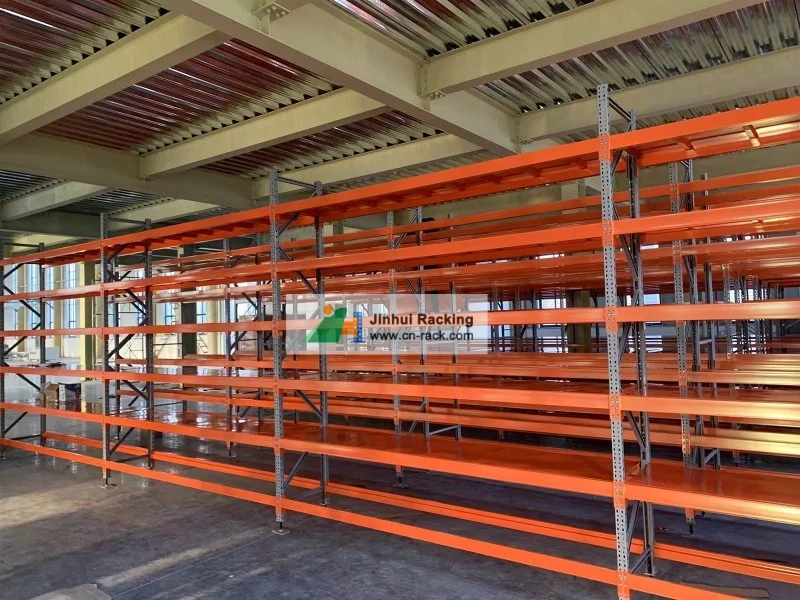

When it comes to warehouse storage, beam racking is a popular choice for many businesses. It offers a simple yet effective solution for organizing and storing palletized goods. As a beam racking supplier, I've seen firsthand how important it is to use these systems safely. Here are some key safety measures that should be taken when using beam racking.
1. Installation and Assembly
First things first, proper installation is crucial. You can't just throw a beam racking system together and expect it to be safe. The installation should be carried out by trained professionals who understand the manufacturer's instructions. They'll ensure that all the components are correctly aligned and securely fastened.
Before installation, make sure the floor where the racking will be placed is level and can support the weight of the racking and the stored goods. Uneven floors can cause the racking to become unstable, increasing the risk of collapse.
Also, check the quality of the racking components. Look for any signs of damage, such as bent beams or cracked uprights. Using damaged parts can compromise the integrity of the entire system.

2. Weight Capacity
One of the most important safety considerations is the weight capacity of the beam racking. Each racking system has a specified maximum weight it can handle. Exceeding this capacity is a major no - no. It can lead to overloading, which may cause the beams to bend or the uprights to buckle, ultimately resulting in a collapse.
When loading the racking, make sure to distribute the weight evenly across the beams. Avoid placing all the heavy items on one side or in one area. This helps maintain the balance of the racking and reduces stress on individual components.
It's a good idea to label the racking with its weight capacity. This way, everyone in the warehouse knows how much weight can be safely stored on each level.

3. Forklift Operation
Forklifts are often used in conjunction with beam racking to load and unload goods. However, improper forklift operation can pose a significant safety risk.
Forklift operators should be properly trained and certified. They need to understand how to maneuver the forklift safely around the racking. This includes being aware of the height and width of the racking and the clearance needed for the forklift to operate.
When using a forklift to load or unload pallets from the racking, operators should approach the racking slowly and carefully. Avoid hitting the racking with the forklift, as this can cause damage to the racking and potentially lead to a collapse.
Also, make sure the forks are properly inserted into the pallets. Incorrect fork placement can cause the pallet to tip or fall off the racking, endangering workers in the area.
4. Regular Inspections
Regular inspections are essential to ensure the continued safety of the beam racking. Inspections should be carried out on a frequent basis, at least monthly.
During the inspection, check for any signs of damage, such as bent beams, loose bolts, or cracked uprights. If any damage is found, it should be repaired immediately. Minor damage, like a loose bolt, can often be fixed easily. However, more severe damage may require the replacement of the affected components.
Inspect the connections between the beams and the uprights. Make sure they are secure and there is no movement. Also, check the stability of the entire racking structure. Look for any signs of leaning or tilting.
5. Safety Accessories
Using safety accessories can significantly enhance the safety of beam racking. Some common safety accessories include:
- Column Protectors: These are placed at the base of the uprights to protect them from forklift impacts. They absorb the force of the impact and prevent damage to the columns.
- Beam Locking Devices: These ensure that the beams are securely attached to the uprights. They prevent the beams from accidentally coming loose, which could lead to a collapse.
- Safety Netting: Safety netting can be installed under the beams to catch any falling objects. This protects workers from injuries caused by falling pallets or goods.
6. Employee Training
All employees who work around the beam racking should receive proper training. They need to understand the safety procedures and the potential hazards associated with the racking.
Training should cover topics such as proper loading and unloading techniques, how to use safety accessories, and what to do in case of an emergency. Employees should also be taught to recognize signs of damage or instability in the racking and to report them immediately.
7. Maintenance
Regular maintenance is key to keeping the beam racking in good working condition. This includes lubricating moving parts, tightening bolts, and painting the racking to prevent rust.
If the racking is exposed to harsh environmental conditions, such as humidity or chemicals, additional maintenance may be required. For example, if the racking is in a wet environment, it may need to be coated with a rust - resistant paint more frequently.
8. Emergency Preparedness
Even with all the safety measures in place, emergencies can still happen. It's important to have an emergency plan in place for dealing with a racking collapse or other accidents.


The emergency plan should include procedures for evacuating the area, notifying the appropriate personnel, and providing first aid to injured workers. Regular drills should be conducted to ensure that all employees know what to do in an emergency.
Our Beam Racking Products
As a beam racking supplier, we offer a wide range of high - quality beam racking systems to meet your warehouse storage needs. For example, our Powerful Capacity Use forklift Warehouse Storage Heavy Duty Pallet Racking System is designed to handle heavy loads and is ideal for warehouses with high - volume storage requirements.
We also have Static Pallet Racking, which is a cost - effective solution for storing pallets in a fixed position. If you're looking for a more advanced system, our New Design Motorized Mobile Racks System Railed Racking Pallet Racking Storage Rack Warehouse Rack With High Load - Bearing offers increased flexibility and space utilization.
For specialized storage needs, we offer Heavy Duty Storage Drawer Racking Industrial Mold Rack System and Warehouse Steel Storage Draw - out Racking and Shelving. These systems are designed to store large and heavy items, such as industrial molds and equipment.
Contact Us for Purchase and Consultation
If you're interested in our beam racking products or have any questions about safety measures for using beam racking, don't hesitate to contact us. We're here to help you find the best storage solution for your business and ensure that you use it safely.
References
- Warehouse Safety Guidelines, Occupational Safety and Health Administration (OSHA)
- Best Practices for Racking Installation, Racking Manufacturers Association