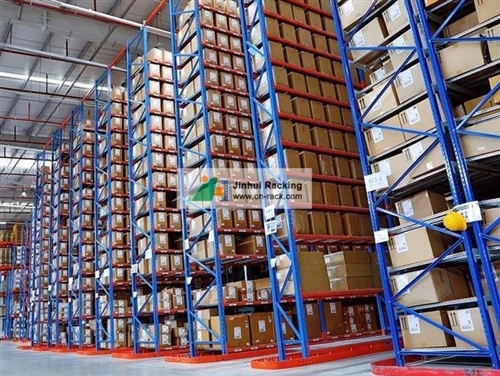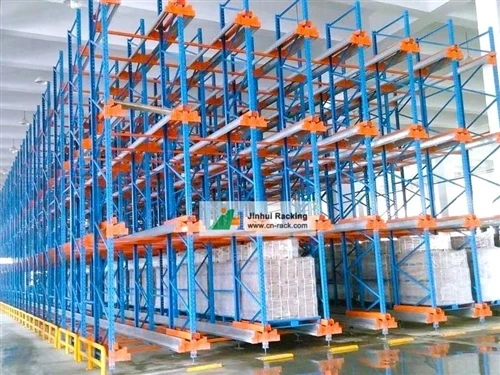

If you've ever walked through a warehouse and stared at racks packed so tight you could barely squeeze a forklift between them, you've probably wondered about space-saving storage solutions that don't kill productivity. As a drive through racking supplier, I get this question all the time: can drive through racking even work in a narrow-aisle warehouse? The short answer is yes, but it's not a one-size-fits-all call-there's a lot to unpack here, from how the system works to what kind of space constraints you're actually dealing with. Let's break this down like I'm chatting with you over a coffee, no fancy jargon to skip through.
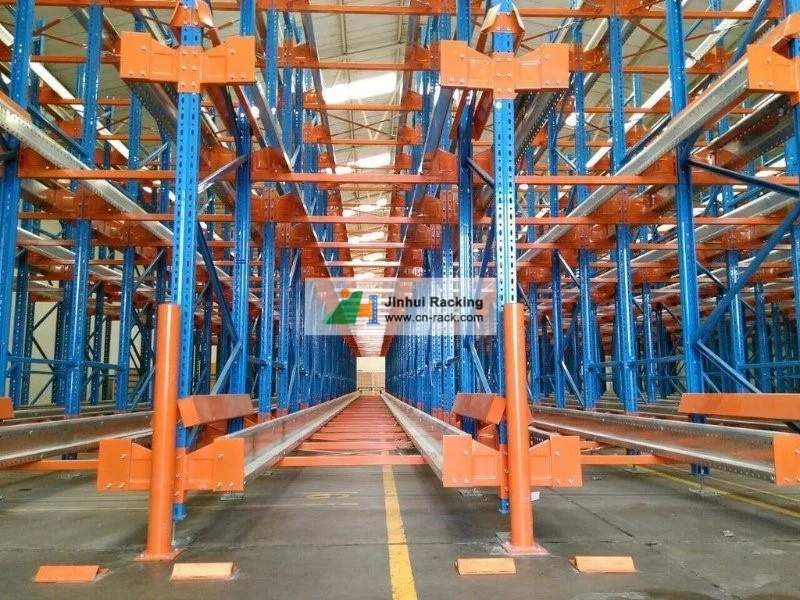
First, let's refresh what drive through racking is, because sometimes folks mix it up with drive-in racking (spoiler: they're cousins, not twins). If you're new to the game, drive through racking is a high-density pallet storage system where pallets are loaded and unloaded from opposite ends of the rack, right? Unlike drive-in, which only lets you access from one side, so it's last-in first-out (LIFO), drive through is first-in first-out (FIFO)-huge for warehouses that deal with perishables, seasonal goods, or anything with expiration dates. It's all about cutting down on unused space: no wide aisles for every rack bank, just narrow lanes for forklifts to move through.
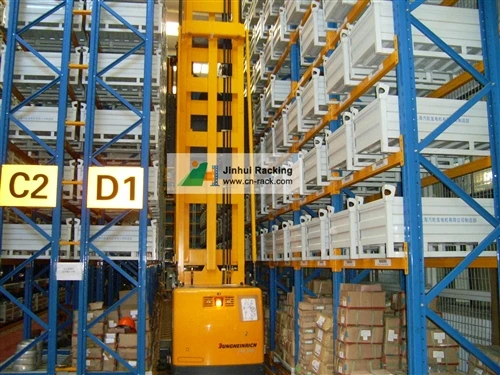
Wait, but narrow-aisle warehouses usually have aisles that are way tighter than standard ones, right? Standard pallet racking needs about 10-12 feet of aisle space for a regular counterbalance forklift, but narrow-aisle can be 6-8 feet, and even 4-5 feet if you're using very specialized turret trucks. So does drive through racking fit into that? Let's start with the basics of forklift maneuverability here. A typical reach forklift or turret truck-super common in narrow-aisle setups-doesn't need as much space to turn as a big counterbalance model, because their forks extend out sideways for narrow slots. That's the key. Drive through racking's lanes aren't the same as a standard wide aisle, but they're designed for the specific forklifts used in tight spaces. I've helped clients with warehouses that originally had 8-foot narrow aisles rework them to fit drive through lanes, and they shaved off 20% more unused floor space without slowing down picks.
But let's not pretend it's just "slap drive through racks into a narrow aisle and go." There are non-negotiables that make or break this, which is where most people get tripped up. First, the lane width. A lot of folks think "narrow aisle" is one size, but actually, narrow-aisle can be anything under 8 feet. Drive through racking's lane width has to be wide enough for your specific forklift's turning radius. I always tell clients: measure your forklift's outermost dimensions when it's turning 90 degrees, then add 6-10 inches for clearance-no more, no less. Too tight, and you're risking forklift damage, pallet drops, or worse, rack collapse. Too wide, and you're wasting the space you're supposed to save. That's why it's not just about the aisle size your warehouse already has-it's about matching the rack's built-in lane specs to the equipment you use.
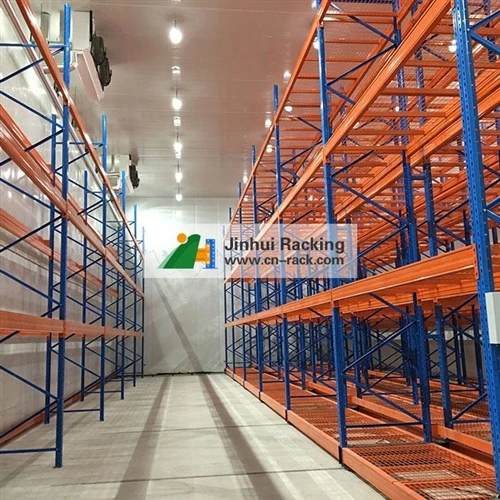
Another big one is your inventory profile. Drive through racking works best for large batches of the same SKU, right? Because you don't want to be digging through pallets of different products to grab one. So if your narrow-aisle warehouse is full of fast-moving, mixed SKUs, drive through might not be the best fit. But if you've got things like cold storage for food processing, where you're storing large quantities of the same item (think frozen veggies all from one harvest run, or bulk dairy products), that's where we see drive through shine even in narrow aisles. We actually have a whole page tailored to that: Warehouse Drive in Pallet Racking System for Cold Room and Processing Industrial. That's the thing-this system isn't just for retail warehouses; it's built for environments where you need high density and FIFO, which often go hand-in-hand with tight space constraints, like cold storage where every square foot costs extra to heat or cool.
Wait, let's talk about a common myth I hear: "Drive through racking is only for big warehouses with tons of space to spare." No way. I worked with a 15,000 square foot narrow-aisle warehouse in Ohio last year that was originally using shelf-based storage and losing almost 30% of their floor space to wide aisles. We swapped out their old racks for drive through, adjusted the lanes to fit their turret trucks (which needed 5.5 feet of clearance, so we tweaked the rack bays to match), and they ended up storing 40% more pallets without expanding their warehouse footprint. They didn't have extra space to widen aisles-they had too little, which is exactly when this system makes sense.
But let's be real, there are caveats. If your narrow-aisle warehouse already uses very small forklifts, like pedestrian rider trucks with less than 30 inches of turning radius, drive through might not work unless you customize the rack's entry points. We've done custom adjustments for small equipment, but it adds a bit to the cost, so it's not always worth it. Also, if you need ultra-fast access to individual pallets-like a warehouse that picks small, mixed orders daily-drive through's FIFO design means you can't grab a pallet from the middle without moving the ones in front, which is slow compared to selective racking. But for bulk, same-SKU storage in narrow spaces, it's a game-changer.
Another angle: ceiling height. A lot of narrow-aisle warehouses are built with high ceilings, right? They use tall racks to go up instead of out, which pairs perfectly with drive through. Because drive through racks are made to be stacked high (up to 40 feet, usually), so if you've got that vertical space, you're doubling down on density. I've seen clients use drive through in narrow aisles and hit 80% space utilization, which is way higher than the 50-60% you get with standard narrow-aisle selective racking. That's the math that matters when you're trying to squeeze more into a small footprint.


Wait, let's circle back to the difference between drive through and drive-in, because that's a mix-up that leads to wrong decisions. Drive-in racking only has one entry, so it's LIFO-last pallet in is first out, which is terrible for expired goods. Drive through is two entries, FIFO, which is why it's better for most warehouses, even narrow ones. We've written a lot about the comparison, so check out Drive-In / Drive-Through Racking if you want the deep dive. The key for narrow aisles is that drive through's two-way lanes are designed to fit the tight turning of narrow-aisle forklifts, whereas drive-in is a bit simpler, usually for even tighter spaces but only for LIFO inventory.
Let me give you a quick real example. A client in the beverage distribution business with a 20,000 sq ft narrow-aisle warehouse came to me last year. They were using selective racking with 9-foot aisles, and they could only fit 1,200 pallets. They needed to handle more summer inventory (soda, beer) without renting another warehouse, which would cost them $12,000 a month in extra rent. We converted their aisles to drive through lanes, adjusted the rack bays to fit their 7-foot narrow-aisle forklifts, and now they fit 1,800 pallets. No new warehouse, no extra rent, just a tweak to their racking. That's the kind of win that makes this worth it.
But here's the hard truth: it's not for every narrow-aisle warehouse. If you're a 3PL that handles 500 different SKUs a day, each with small orders, drive through will slow your picks down too much. If your forklift fleet is a mix of big counterbalance trucks and tiny narrow-aisle units, you'll end up with a lot of wasted space for the ones that don't fit. But if you're dealing with large, same-SKU inventory, need FIFO, and your narrow aisles are only tight because standard racking wastes space, this is a solid option.
So, to wrap this up: yes, drive through racking can absolutely be used in a narrow-aisle warehouse, but only when you do a few things right. First, match the rack's lane width to your forklift's turning radius-measure twice, install once. Second, make sure your inventory is suited for FIFO bulk storage (perishables, seasonal goods, large batches). Third, use the right type (drive through, not drive-in, unless you're okay with LIFO). If you nail those three, you'll get way more storage capacity without expanding your footprint.
If you're sitting there staring at your narrow-aisle warehouse, wondering if this makes sense for your team, don't guess-reach out. We don't do one-size-fits-all kits, we work with you to tweak the racking to fit your space, your equipment, and your inventory. No sales pitches, just straight talk about what will actually move the needle for your storage problems.
References
- Material Handling Industry Association. (2022). "High-Density Storage Solutions for Narrow Aisle Warehouses."
- Pallet Racking Manufacturers Association. (2021). "Drive Through Rocking Design Guidelines for Forklift Compatibility."