
Hey there, if you're deep in the thick of warehouse operations or logistics, you've probably bounced around with 4 Way Shuttle Systems before-am I right? As someone who's been in the racking and storage game for years, helping all kinds of warehouses size up their gear, one question comes up more than any other: what's the actual maximum load capacity of these shuttle systems? It's not a one-size-fits-all number, let me tell you. I've seen guys guess wrong and end up with damaged pallets, stuck inventory, or even safety hazards, so let's break this down like we're chatting over coffee (no stuffy engineering jargon, promise).
First off, let's get clear on what a 4 Way Shuttle System is, just for anyone who's new here. Unlike regular pallet shuttles that only move forward and back in one aisle, a 4 Way Shuttle can slide along rails both lengthwise and crosswise-so it can weave through a rack's multiple levels and bays like a tiny, smart warehouse worker. That flexibility is why so many warehouses love it for high-density storage, but its load capacity depends on way more than just the shuttle itself. I've seen people fixate on a random number online, but in reality, it's a chain of factors: the shuttle's build, the racking it's mounted to, the pallets you're using, even how you load the whole setup.
Let's start with the star of the show: the shuttle unit itself. Most standard 4 Way Shuttles you'll find from trusted suppliers max out around 2,500 to 4,000 kg per pallet. Wait, that's a big range, right? Why? Cheaper, thin-walled shuttles might hit 2,500 kg on a good day, while heavy-duty models designed for extreme loads can push up to 4,500 kg. But here's the catch-those numbers only apply if the rest of your system is built to handle that weight. You can't plop a 4,000 kg pallet on a flimsy rack and call it a day. That's why picking the right racking is non-negotiable.
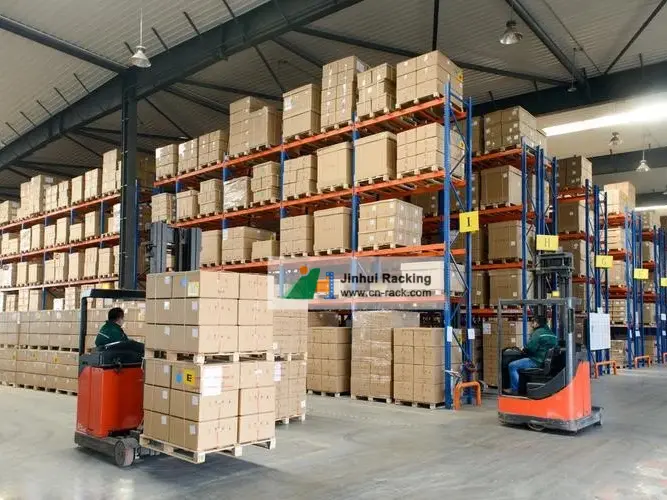
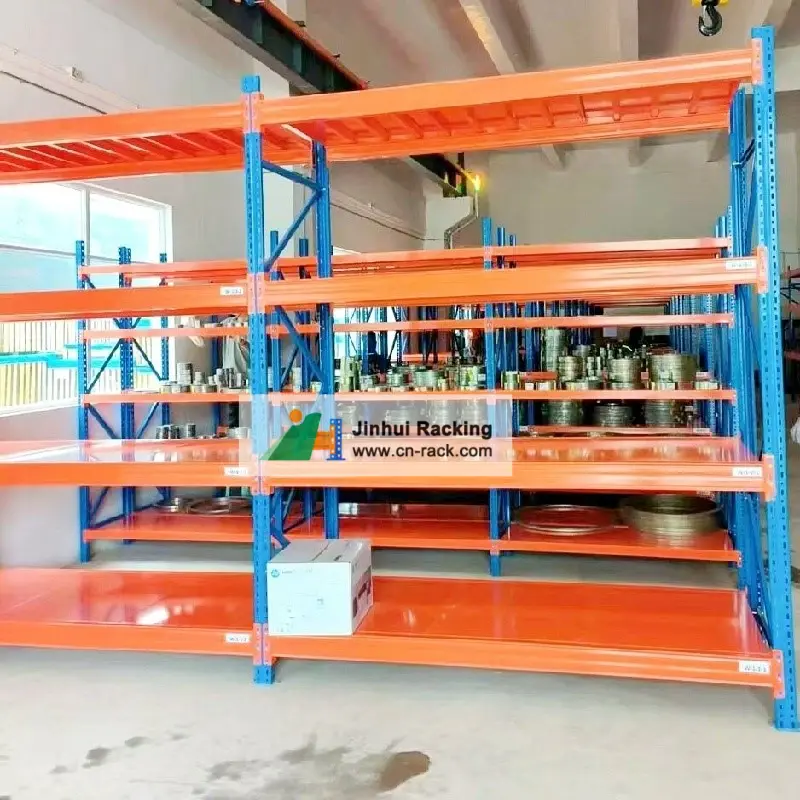
Speaking of racking, this is where most people slip up. If your current pallet rack is only rated for 2,000 kg per beam, a shuttle carrying 2,500 kg is gonna bend that beam over time, leading to structural issues. I always recommend pairing your 4 Way Shuttle with racking that's specifically built for heavy loads. For example, if you need a system that's both flexible and beefy, check out our range of heavy-duty racks like the Jinhui Heavy Duty Shelves Industrial Steel Rack Warehouse Pallet Racking For Medium Weight Warehouse Racking System (link here: /pallet-racking/jinhui-heavy-duty-shelves-industrial-steel.html) - that racking is engineered to handle consistent, heavy loads without sagging, which is critical for keeping your shuttle moving smoothly and safely.
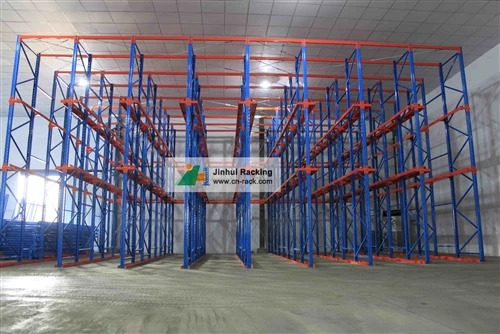
Another big factor: the rails in your rack. 4 Way Shuttles run on embedded rails that are welded or bolted to the rack beams, right? If those rails are thin or low-grade steel, they'll warp under heavy weight, making the shuttle jam or stop working. I've had clients come to me saying their shuttle keeps getting stuck, and 9 times out of 10 it's because their rails were too weak for their pallets. For that reason, a lot of our clients opt for systems like the Powerful Capacity Use forklift Warehouse Storage Heavy Duty Pallet Racking System (link here: /pallet-racking/powerful-capacity-use-forklift-warehouse.html) - the rails here are integrated with the rack for extra sturdiness, so you don't have to worry about that weak link.
Wait, let's not forget about the pallets themselves. A lot of people assume a pallet is a pallet, but that's not true. A cheap, flimsy wooden pallet might only hold 1,000 kg, while a reinforced steel or heavy-duty plastic pallet can handle 3,500 kg or more. If you're loading a 4 Way Shuttle with a heavy wooden pallet that's starting to crack, you're not just risking the shuttle-you're risking a whole pallet of stock falling. I always tell clients to invest in pallets that match the shuttle's capacity, or you're just wasting money on overkill shuttle units.
Also, how you load the shuttle matters. If you're stacking unevenly-like putting 1,000 kg on one end of the pallet and 500 kg on the other-that creates an unbalanced load. Even if your shuttle is rated for 4,000 kg, that uneven weight can put way more stress on one side of the shuttle's wheels or the rack rails. We have a lot of clients who track load distribution with simple scales on their forklifts, and it's made a huge difference in reducing maintenance and downtime.
Now, what about edge cases? Like, if you're storing very long or wide pallets-say, 12-foot pallets for lumber or machinery. A standard 4 Way Shuttle isn't designed for that, but some custom units can handle longer loads. That's where custom solutions come in. If your warehouse has unique needs, custom pallet racking is definitely worth looking into. We've worked with clients that have specialized 4 Way Shuttles paired with our custom-built racks, so they can store extra-long or extra-heavy loads without any issues. Check out custom pallet racking here: /pallet-racking/custom-pallet-racking.html.
Wait, let's talk about common myths. I hear all the time that 4 Way Shuttles can handle way more weight if you upgrade the battery or something. Nope, the battery is just for powering the shuttle's movement-it has nothing to do with load capacity. Another myth: if you use a motorized system, the capacity goes up. Not really-motorization makes the shuttle easier to operate, but the load limit is still based on the shuttle's frame, rails, and rack. Oh, and don't confuse 4 Way Shuttle Systems with motorized mobile racks. Motorized mobile racks are a different type of storage-they move entire racks along a rail to save space, while 4 Way Shuttles move within the rack. If you're considering space-saving and heavy load, sometimes combining both makes sense, like the New Design Motorized Mobile Racks System Railed Racking Pallet Racking Storage Rack Warehouse Rack With High Load-Bearing (link here: /pallet-racking/new-design-motorized-mobile-racks-system.html) - that combo gives you density and load power, which is perfect for big warehouses.
What about dynamic vs. static capacity? Oh, that's another key point I don't see people talk about enough. Static capacity is the maximum weight the shuttle can hold when it's sitting still on the rack. Dynamic capacity is the max weight it can handle while moving-like sliding from one bay to another. For most standard 4 Way Shuttles, dynamic capacity is about 80-90% of static capacity. So if a shuttle has a static rating of 3,000 kg, it's good for around 2,400-2,700 kg while moving. That matters because if you load it to the absolute max while it's moving, you could have it tip or the rails shift. I always advise clients to stay below the dynamic limit, not just the static one.
Now, let's get to the real-world numbers. I've installed dozens of 4 Way Shuttle Systems, and the sweet spot for most mid-sized warehouses is around 2,000-3,500 kg per pallet. That works for everything from packaged goods to industrial parts to food products that need high-density storage. For heavy-duty applications-like storing steel rolls or construction materials-we've set up systems with shuttles rated for 4,000-4,500 kg, paired with our heavy-duty racking and reinforced rails. Those setups have run flawlessly for years, with zero issues.
But wait, there's one more thing: maintenance. Even if you have a system rated for 4,000 kg, if you never lubricate the shuttle's wheels or check the rails for wear, the capacity will drop over time. I tell clients to do a quick inspection every month: check that rails aren't bent, wheels aren't cracked, and the shuttle moves smoothly without jolts. Doing that small stuff keeps your system running at its maximum capacity for years.
So, putting it all together: the maximum load capacity of a 4 Way Shuttle System isn't a single number. It's a team effort between the shuttle unit, your racking, rails, pallets, load distribution, and regular maintenance. If you build your system right-match the shuttle to your load, use heavy-duty racking and rails, get the right pallets, and stay on top of maintenance-you can get up to 4,500 kg per pallet, which is way more than most warehouses need. But cutting corners on any part of that will bring the capacity down, and could lead to problems.
If you're trying to figure out what your 4 Way Shuttle System's maximum load could be, or you're looking to upgrade your current setup, I'd be happy to walk you through the details. Every warehouse is different-different products, different space, different throughput-so there's no one-size-fits-all solution. We've worked with small warehouses just starting out and huge distribution centers, so we know how to tailor a system that fits your exact needs. Whether you need a standard system or something custom, we've got you covered. Reach out to us to chat through your project, no pressure.


References:
- Warehouse Rack Manufacturers Association. (2022). "Load Capacity Guidelines for Automated Storage and Retrieval Systems."
- Jinhui Storage Equipment Co. Ltd. (2023). "4 Way Shuttle System Technical Specifications and Load Ratings."
- Pallet Racking Institute. (2021). "Best Practices for Integrating Shuttles and Racking Systems in Heavy-Duty Warehouses."
- Modern Materials Handling. (2022). "Common Mistakes That Reduce Automated Storage System Load Capacity."
- International Warehouse Logistics Association. (2023). "Guide to Selecting and Maintaining High-Capacity Racking and Shuttle Systems."