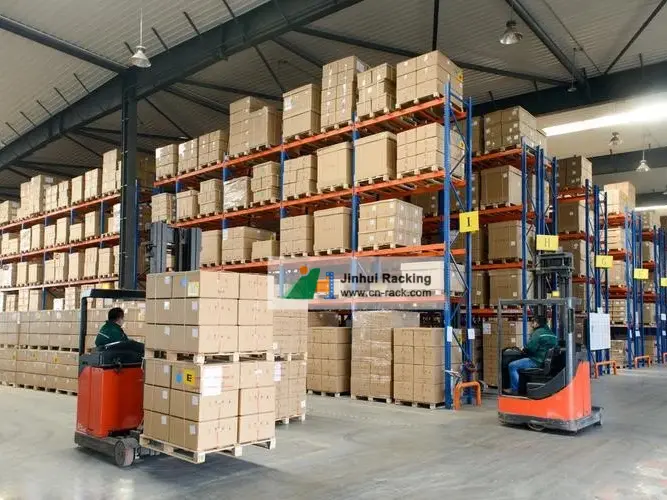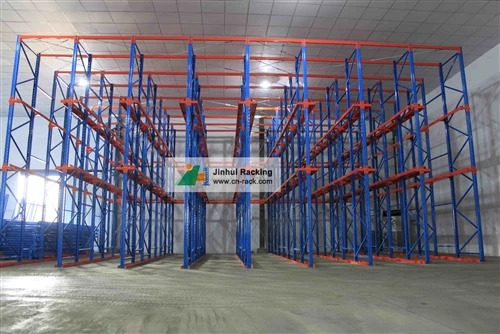

If you've ever walked through a busy distribution center at 2 a.m., watching forklifts weave between stacks of pallets to pick orders, you've probably wondered: could that process run smoother, faster, and with fewer errors? As a supplier of pallet flow racking systems, I get this question all the time from warehouse managers, operations directors, and automation consultants. Specifically, they want to know if pallet flow racking can be integrated with automated storage and retrieval systems (AS/RS) - and the short answer is yes, but it's not as simple as bolting robotics onto existing racking. Over the past decade, we've helped dozens of clients make this work, and today I want to break down how, why, and what you need to consider to pull it off.
First, let's get clear on what each system does on its own, because their core strengths are complementary, which is where the magic happens. Pallet flow racking is a gravity-based storage system that uses inclined rails and wheeled pallet slings to move pallets from the back of the rack to the front. It operates on a first-in, first-out (FIFO) inventory model, which is non-negotiable for industries like food and beverage, pharmaceuticals, and fast-moving consumer goods (FMCG) where expiration dates or stock rotation are critical. For manual operations, it cuts down on forklift travel time: instead of driving to a specific slot to drop off or pick up a pallet, drivers only need to access the front of each lane, and gravity does the rest. It also increases storage density by 30-50% compared to selective racking, since each lane can hold multiple pallets on a single vertical face, with no aisles needed between individual positions.
AS/RS, on the other hand, is a broad category of automated systems that use robots, conveyors, and software to store and retrieve goods without manual intervention. The most common types for palletized goods are unit-load AS/RS, which use cranes to move pallets between storage racks and pickup/dropoff (P&D) stations, and mini-load AS/RS for smaller items. AS/RS shines in high-throughput environments with strict accuracy requirements: it reduces labor costs by eliminating forklift operators, cuts order picking errors by up to 90%, and can operate 24/7 without fatigue. But it has a weakness: it's often rigid, designed for specific load sizes and SKUs, and many standard AS/RS setups use static racking that doesn't leverage gravity, leading to wasted space and longer cycle times for FIFO-compliant inventory.
So why pair these two? Let's start with the biggest pain point we see with standalone AS/RS: FIFO consistency. Most unit-load AS/RS systems operate on either last-in, first-out (LIFO) or a random slot allocation model, which is a disaster for industries that require goods to ship in the order they arrive. A bakery, for example, can't have a pallet of bread baked on Monday sitting next to a pallet baked on Wednesday - the older stock has to go out first. Trying to make standard AS/RS follow FIFO requires complex software and frequent manual checks to rearrange pallets, which negates a lot of the labor savings. Pallet flow racking solves that problem natively, because gravity moves pallets in the order they are loaded, so the oldest pallet is always at the front, ready to be retrieved. When you combine that with AS/RS, you get an automated system that maintains FIFO without extra steps.
Another benefit is storage density optimization. Standard unit-load AS/RS often requires wide aisles for cranes to operate, or uses racking that only holds one pallet per level per slot. Pallet flow racking, by contrast, can hold 4-8 pallets per lane, with no aisles needed between lanes (crane aisles are only at the end of the racking runs). That means you can fit up to 60% more pallets in the same floor space than a standalone unit-load AS/RS system, which is a huge win for warehouses with limited square footage. For a 100,000 sq ft warehouse, that can translate to an extra 20,000 pallets of storage - enough for an additional month of inventory for most FMCG or pharmaceutical clients.
But here's the catch: not all pallet flow racking is created equal when it comes to automation. If you take a standard manual pallet flow racking system, designed for forklifts to drive up and drop off pallets at the back of the lane, and try to add a crane to do the same, you're going to run into problems. The standard pallet stops, wheel slings, and rail spacing are calibrated for human operators, not robots. For example, manual forklifts drop pallets with a margin of error of 2-3 inches, but AS/RS cranes need precise, consistent positioning within ½ inch to deposit a pallet without damage or misalignment. That means custom engineering is non-negotiable when designing an automated pallet flow racking system.
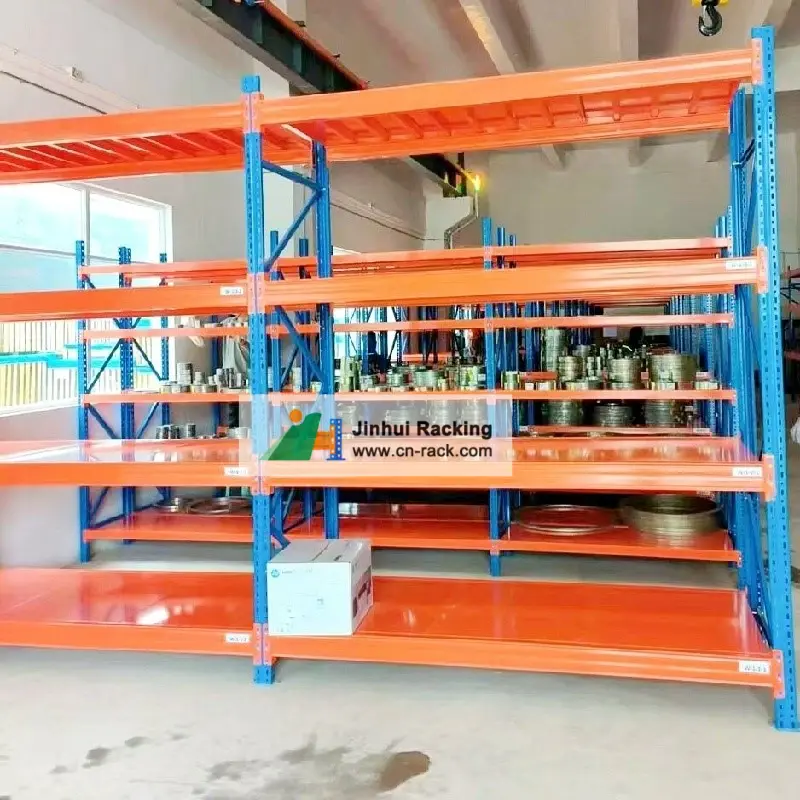
Over the years, we've refined our pallet flow line to work seamlessly with AS/RS, and we've seen our clients' throughput jump by 40% after integration. The key design choices we make focus on three areas: load compatibility, lane sizing, and software alignment. First, we engineer our pallet flow rails and wheel slings to fit industry-standard pallet sizes (48x40 inches is the most common in North America, but we also offer custom sizes for European and Asian markets) and ensure that the weight capacity of each lane matches the AS/RS crane's load limits. For heavy-duty applications, like storing industrial parts or raw materials, we've engineered a specialized heavy-duty storage drawer racking system that works with AS/RS to handle loads up to 10,000 lbs per pallet, without sacrificing the FIFO functionality of standard pallet flow. You can learn more about that system here: /compact-pallet-racking/heavy-duty-storage-drawer-racking-industrial.html. We also offer a warehouse steel storage draw-out racking and shelving option for smaller, high-volume SKUs that work with mini-load AS/RS, expanding the automation compatibility across different warehouse operations: /compact-pallet-racking/warehouse-steel-storage-draw-out-racking-and.html.
Lane sizing is another critical factor. For automated systems, each pallet flow lane is assigned to a single SKU, because mixing SKUs in a lane would lead to retrieval errors. That means we design lane lengths based on the AS/RS's cycle time and order volume: for fast-moving SKUs that need to be retrieved multiple times an hour, we make lanes shorter so the crane doesn't have to travel far to pick up a pallet. For slow-moving SKUs, we can make lanes longer to maximize storage density. We also add adjustable pallet stops that can be triggered remotely by the AS/RS software, so if a SKU is running low, we can slow the pallet at the front of the lane to prevent over-picking.
The third piece is software alignment, and this is where a lot of integrations fail. The pallet flow racking system's controls need to talk directly to the AS/RS's warehouse management system (WMS), not just operate as a separate unit. For example, when a new pallet is delivered to the warehouse, the WMS assigns it to an empty pallet flow lane, sends a signal to the AS/RS crane to transport the pallet to the back of that lane, and confirms that it's in place. When an order is placed, the WMS pulls the oldest pallet from the front of the correct lane, sends a signal to the crane to retrieve it, and triggers a replenishment alert when the lane is low. We work with each client's IT team to customize this integration, because off-the-shelf software often doesn't account for the unique flow dynamics of pallet flow racking - like how pallets can slow down if the rails are dirty, or how lane levels need to be adjusted for different pallet weights.
Of course, there are limitations to this integration, and it's not the right choice for every warehouse. If your facility has a high mix of SKUs with varying sizes and weights, or if you only need to store pallets for a short period (less than 30 days), the cost of custom pallet flow racking and AS/RS integration may not be justified. We always start our consultations by auditing a client's current operations, inventory turnover rates, and order volume to determine if the combination makes sense. For example, a small e-commerce warehouse with 10,000 pallets a year may be better off with a semi-automated system, while a large distribution center with 50,000+ pallets and FIFO requirements will see a ROI on an automated pallet flow AS/RS integration in 2-3 years.
One of my favorite case studies is a craft beverage client we worked with two years ago. They had a 200,000 sq ft warehouse with standard selective racking and manual forklifts, and they were struggling with high order picking errors, frequent stockouts because they couldn't track rotation, and labor costs that were eating into their profits. We installed an automated pallet flow racking system integrated with a unit-load AS/RS, customized to handle their 32x40 inch pallet size (specifically for kegs and cases of beer) and their 14-day FIFO requirement for perishable inventory. After the integration, their picking errors dropped from 2.1% to 0.2%, their order throughput increased by 55%, and they reduced their forklift fleet by 60% because the AS/RS crane handled most of the transport. They've since expanded the system to a second warehouse, and they now use our heavy-duty storage drawer racking for their raw material storage, which works with their new mini-load AS/RS for incoming supplies.


Another common misconception is that automated pallet flow racking requires a complete warehouse overhaul. We've done retrofits for existing warehouses that only require reconfiguring a portion of the racking and adding AS/RS components, rather than ripping out all current storage systems. For example, a pharmaceutical client in the Midwest had a 15-year-old warehouse with outdated selective racking, and they needed to comply with FDA FIFO requirements while increasing throughput by 30% to meet new order volume. We designed a retrofit that replaced 30% of their selective racking with automated pallet flow racking, and integrated it with their existing AS/RS, so they didn't have to pause operations during installation. That cut their downtime to three days, and they achieved their throughput goal within six months.
When it comes to maintenance, automated pallet flow racking is actually more reliable than many other automated storage systems. The moving parts - the wheel slings - are enclosed in the rails, so they're protected from dust, debris, and damage, which is a big plus in warehouse environments. We offer a preventive maintenance program that includes monthly inspections of rail alignment, wheel condition, and AS/RS software integration, so clients can avoid costly downtime. Unlike AS/RS systems that require specialized technicians to repair, our pallet flow components are simple to replace, which keeps long-term maintenance costs low.
At the end of the day, the question isn't just "Can pallet flow racking be used for automated storage and retrieval systems?" - it's "How can the combination of these two systems solve your specific warehouse challenges?" As a pallet flow racking supplier, we don't sell one-size-fits-all solutions. We work with clients to understand their inventory, their throughput goals, their budget, and their long-term growth plans to design an integrated system that maximizes efficiency, reduces errors, and complies with industry regulations. If you're considering automating your warehouse, or if you're looking to upgrade your existing storage system to work with AS/RS, we'd be happy to conduct a free operational audit to assess your needs and provide a customized proposal. Reach out to our team to start the conversation.
References
- Material Handling Industry Association. (2022). Automated Storage and Retrieval Systems (AS/RS) & Gravity Racking Integration Best Practices. MHIA Technical Report.
- Smith, J. et al. (2021). Gravity-Based Storage for Automated Warehouses: Optimizing FIFO Workflows. Journal of Supply Chain and Operations Management, 19(3), 412-427.
- Industrial Racking Manufacturers Association. (2023). Heavy-Duty Pallet Storage Systems for Automated Environments. IRMA Safety and Design Guidelines.
- Warehouse Education and Research Council. (2022). ROI Analysis of Automated Pallet Flow Racking Integrations. WERC Quarterly Logistics Report.