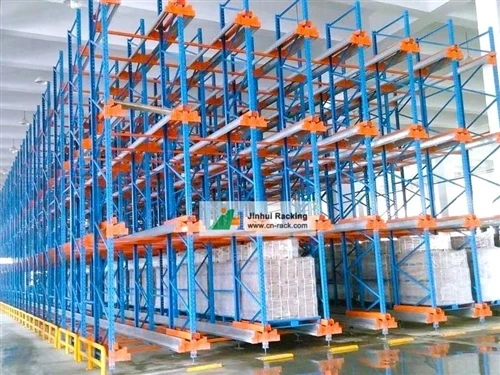

If you've ever worked in a warehouse storing long, bulky stuff-think pipes, lumber, or unevenly shaped goods-you know cantilever racks are a total game-changer. But here's the thing most folks don't realize right off the bat: the angle of those cantilever arms isn't just a random design choice. It actually makes a huge difference when you're loading and unloading, and that's something I've seen firsthand as a cantilever rack supplier. I get a ton of questions from warehouse managers, small business owners, and forklift operators about why some racks feel way easier to work with than others, and 9 times out of 10, the answer comes down to arm angle.
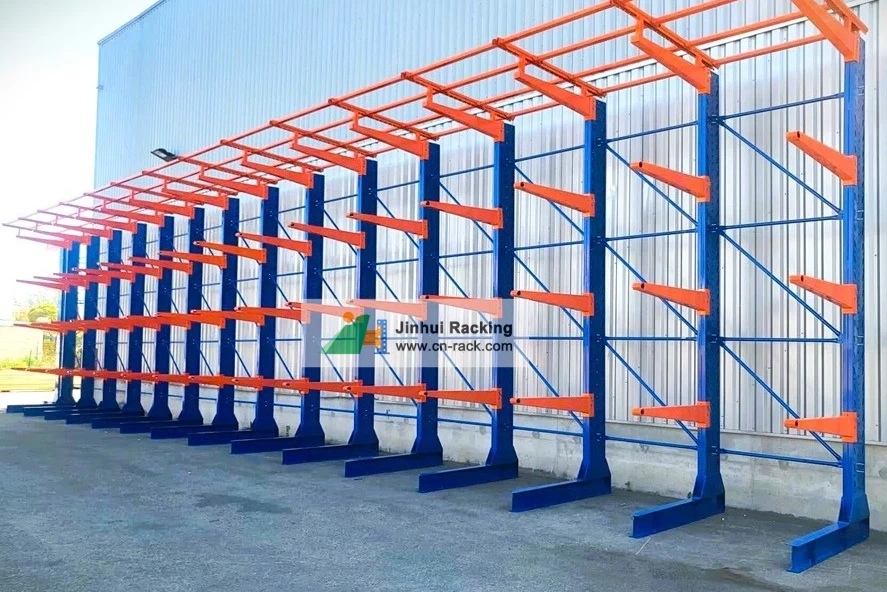
First, let's break down the basics for anyone who's new to cantilever racks. Unlike standard pallet racks with enclosed sides, cantilever racks have open, horizontal arms that stick out from vertical posts-no awkward pallet slots getting in the way of long items. There are different types too: single-sided cantilever racks for narrow spaces, heavy-duty ones for super heavy loads, and even galvanised options for moisture-prone areas. If you're just starting out, checking out single sided cantilever rack or heavy duty cantilever rack is a good first step, but before you pick any, you've gotta nail down that arm angle.
Let's start with how arm angle affects load stability-because if your load shifts mid-unloading, that's not just annoying, it's dangerous. When arms are angled, they have a tilt: most standard arms lean a little downward toward the end (that's called a "negative angle," or sometimes a 5-degree tilt) or sometimes upward (positive angle, like a 3-degree tilt). I used to think more tilt meant more grip, but I quickly learned that's not the case. For example, negative angle arms-tilted down toward the front-push the top of the load back against the vertical post. That sounds like a win for stability, right? But here's the catch when unloading: the load can get wedged against the post, so you might have to yank it hard, or even risk damaging the item if it's fragile. I once had a customer who installed negative angle arms for storing PVC pipes, and half his load got stuck every time he tried to pull them out. He had to rearrange his entire setup just to get around it.
On the flip side, arms tilted slightly upward-positive angle, like a 2 to 3-degree tilt-are way easier to work with during loading and unloading. The upward slope lets long items rest toward the back of the rack, so when you slide them in with a forklift, they glide smoothly without catching on anything. When you pull them out, they don't get wedged because there's no downward pressure holding them tight against the post. A construction supply client of mine switched their heavy duty cantilever rack arms from negative to positive angle last year, and their unloading time for lumber dropped by almost 30%-that's a huge productivity gain for a busy jobsite warehouse.
Wait, but it's not just about stability and ease of pull-arm angle also plays into how much weight the rack can handle. That's a big one for anyone storing heavy stuff. If arms are angled too steeply, the weight of the load isn't distributed evenly along the arm. Let's do a quick, no-math-stress breakdown: when you load a straight arm (0-degree angle), all the weight sits on the arm's entire span, so the rack's vertical posts have to support that even load. If the arm is tilted downward too far, most of the weight gets pulled toward the end of the arm, right? That creates "tip load" on the vertical post, which can make the whole rack lean over time, or even warp the arms if they're not heavy-duty enough. We've seen this happen with cheap, off-brand cantilever racks where arms were angled 10 degrees downward-half the arms bent within 6 months because the weight wasn't distributed right. That's why, for heavy loads like pipes or irregular bulky goods, a moderate positive angle (2 to 3 degrees) is non-negotiable. It keeps the weight concentrated closer to the vertical post, so the rack stays stable and holds more weight without failing.
Another factor: your loading equipment. Most warehouses use forklifts, but some use hand trucks or even manual lifts for smaller items. If you're using a forklift with a long, narrow fork, arm angle matters for how you position the load. Let's say you're loading a steel pipe onto a rack with negative angle arms. The pipe's center of gravity sits toward the end of the arm because of the tilt, so when you slide the pipe onto the arms, you have to line it up perfectly to avoid it sliding off. With positive angle arms, the pipe's center of gravity sits a little closer to the back, so even if your forklift is slightly off, the pipe stays balanced. For smaller, lighter items-like accessories, which are stored on many industrial cantilever rack systems for small parts- a slightly steeper positive angle (3 to 5 degrees) works. It keeps small bins or boxes from rolling off the end of the arm while still letting you slide them in easily with a hand truck.
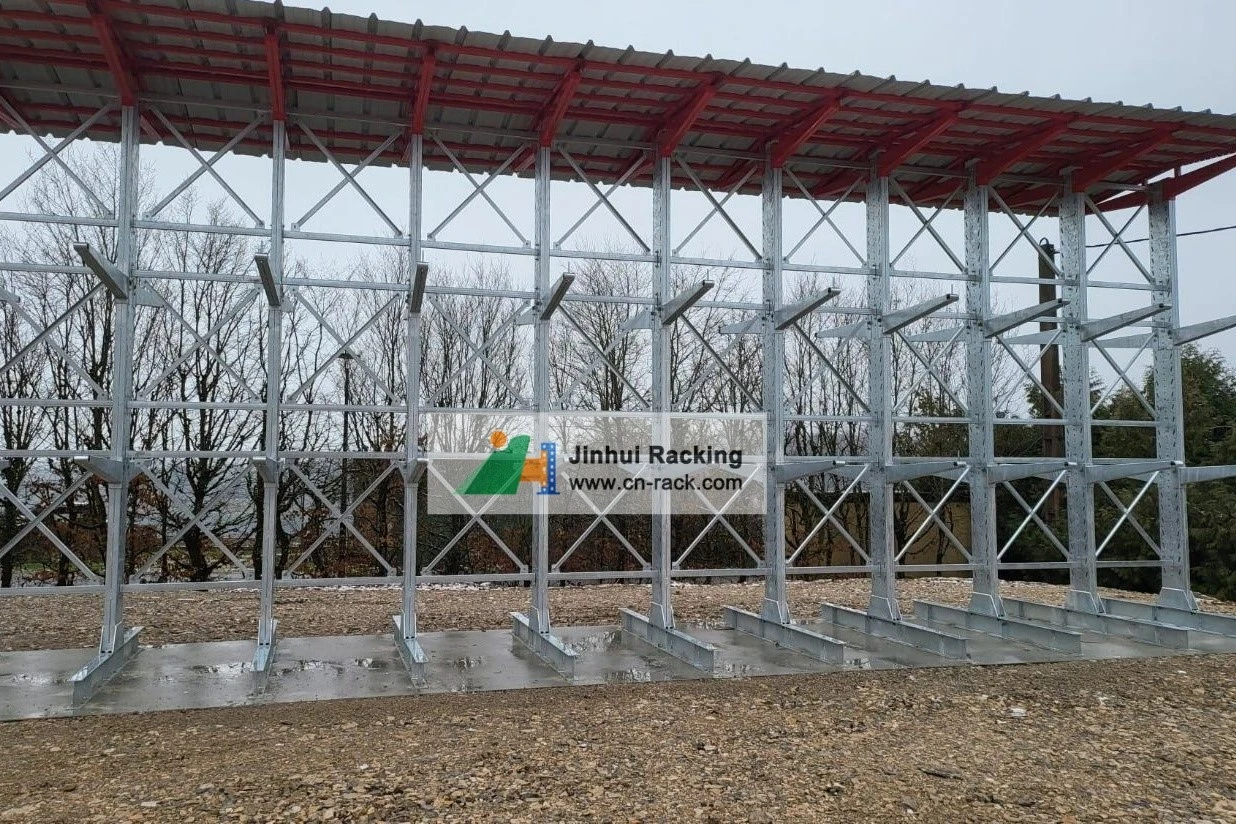
I also can't forget about environmental factors, especially if you're storing items outside or in damp warehouses. Galvanised cantilever racks are popular for outdoor storage because they resist rust, but their arm angle can't be an afterthought. If you're storing lumber outdoors where wind is a problem, a positive angle arm helps the load settle into place, so wind isn't as likely to blow long, narrow items like fencing or PVC sheets off the rack. I had a customer who stored galvanised steel fencing on his outdoor racks, and before we adjusted the arm angle, he'd lose at least one panel a month to wind gusts. After switching to a 3-degree positive angle, that number dropped to zero-huge savings for his inventory.
Wait, there's a common mistake I see all the time: people pick the right rack type (heavy duty, single sided, etc.) but don't adjust the arm angle based on what they're storing. For example, a customer who stores fragile furniture shouldn't use a negative angle-because if the load wedges, they might scratch the furniture trying to pull it out. Another customer who stores heavy steel beams shouldn't use a steep positive angle-because the beam's weight would pull too much on the end of the arm, risking a bend. That's why it's so important to match arm angle to your specific use case, not just grab the first rack you see.
Let's circle back to the examples I mentioned earlier. The construction supply guy with the lumber: he switched his arms from 5 degrees negative to 2 degrees positive, and his unloading time went down. The PVC pipe guy: he switched his negative angle arms to 3 degrees positive, and his stuck-load problem went away. The outdoor fencing guy: galvanised racks with a 3-degree positive angle fixed his wind loss issue. These aren't just random stories-they're the result of testing what works for different loads.
Now, if you're in the market for a cantilever rack, here's my quick advice: first, figure out what you're storing. If it's long, heavy goods like pipes or lumber, look into heavy duty storage cantilever racking system for pipe and irregular goods-they're built to handle higher weight, and their standard arm angle is usually a moderate positive angle. If you're storing smaller accessories, check out warehouse equipment industrial cantilever rack system for accessories storage, which often have adjustable arm angles so you can tweak them for your load. If you're working with limited space, single sided cantilever racks are perfect, and they come with adjustable arms too. For outdoor use, galvanised cantilever rack is the way to go, and we recommend a 3-degree positive angle for wind stability.
I know it can feel overwhelming to choose the right rack and arm angle, especially if you're not super familiar with warehouse equipment. That's why I'm here-whether you're a small business owner setting up a new storage area or a warehouse manager looking to boost productivity, we can work together to find the right setup. Don't guess on arm angle, don't settle for a one-size-fits-all solution-let's make sure your loading and unloading is as smooth and safe as possible.
If you're ready to chat through your needs, or just want to learn more about our cantilever rack options, reach out to our team to discuss your specific storage requirements. We're here to help you get the most out of your warehouse setup, no matter what you're storing.
References
- Material Handling Industry Association. (2022). Cantilever Racking: Design and Operational Best Practices. MHIA Publications.
- Warehouse Equipment Suppliers Association. (2021). Load Stability in Industrial Storage Racks. WESA Technical Bulletin.
- National Institute for Occupational Safety and Health. (2020). Reducing Warehouse Injury Risks: Load Handling and Equipment Design. NIOSH Safety Report.