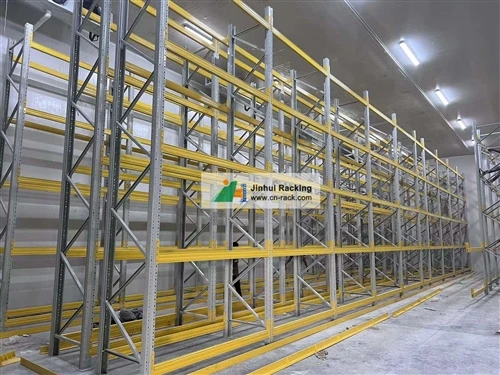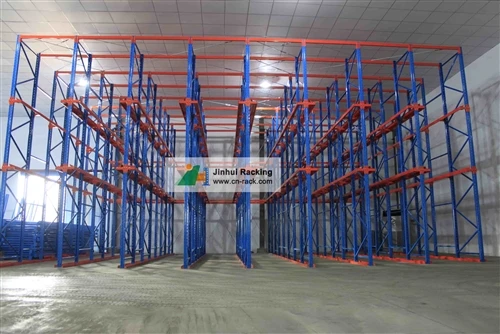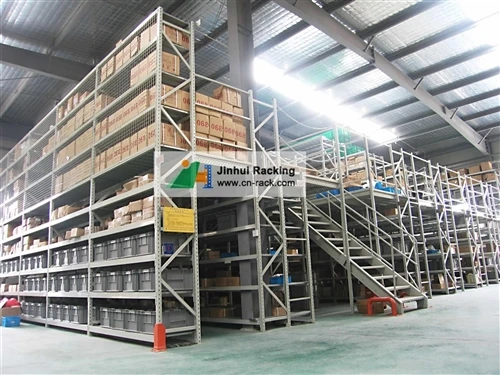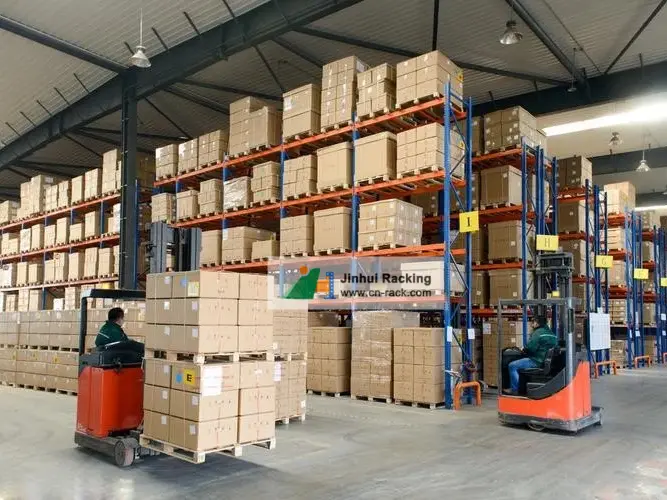

If you've ever walked through a warehouse that looks like it's packed to the rafters with pallets, with every inch of vertical and floor space used without cluttering aisles or causing frequent forklift wait times, there's a good chance you've encountered push back racking. As a push back racking supplier, I get asked all the time: "Where is this system actually used?" It's not one-size-fits-all, and seeing it deployed correctly in specific industries makes all the difference between a solution that boosts efficiency and one that becomes a warehouse bottleneck. Let's break down the industries where push back racking shines, how it solves unique pain points for each, and why it's become a go-to for teams balancing high storage density and inventory flow.
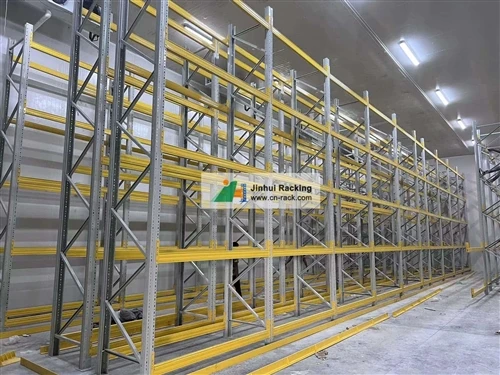
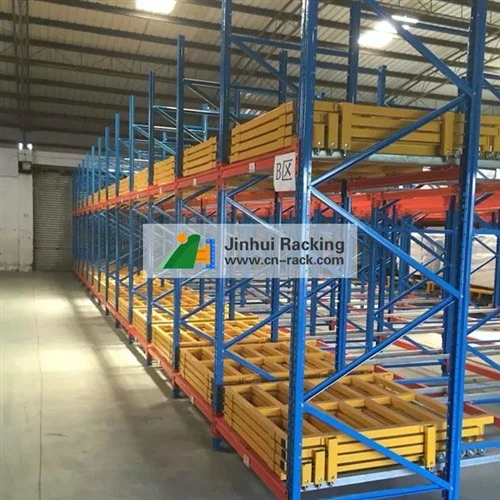
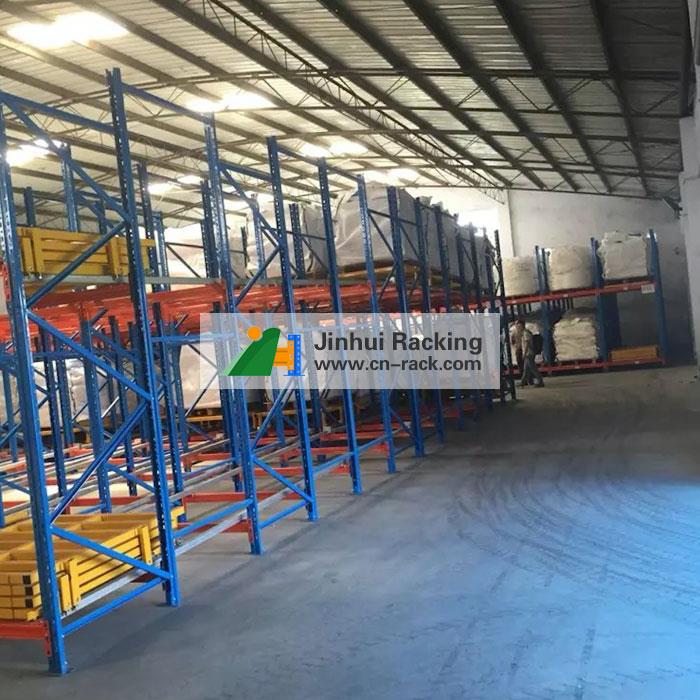
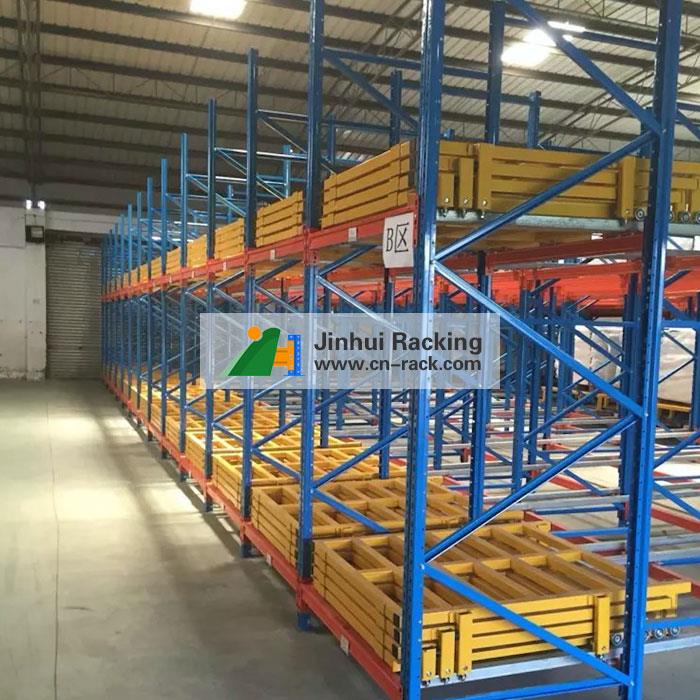
First, let's refresh what push back racking actually does, just to set the stage. Unlike selective pallet racks, which only hold one pallet per shelf level and require a separate aisle for each pallet, push back racking uses a set of nested carts on inclined rails. Forklifts load pallets from the front aisle, and each new pallet pushes the ones behind it deeper into the racking. When you need to retrieve a pallet, you pull from the front, and the pallets behind roll forward into the aisle automatically. This means you get 50% to 75% more storage density than selective racking for the same floor space, and it works on a last-in, first-out (LIFO) inventory model-key for industries that store large batches of the same SKU. If you want to dive deeper into the mechanics, check out the official breakdown: Push Back Racking System to see how the rails and carts work for heavy-duty pallets.
One of the earliest and most consistent industries to adopt push back racking is the food and beverage sector. Let's be real: food and beverage warehouses deal with perishables, large batch runs, and strict rotation rules (first-in, first-out, or FIFO, wait-hold on, push back is LIFO, but there's a workaround with adjacent bays) plus super high demand for SKUs that sell in consistent bulk. Think about a craft brewery with 24, 30, or 40 cases of the same beer variant coming in each week, or a snack food distributor storing pallets of chips, cookies, and frozen pizzas that move in large volumes to grocery chains. For these teams, space is a non-negotiable-grocery real estate is expensive, so warehouses need to cram as much stock as possible without sacrificing fast picks. Push back racking solves that: a single aisle can hold 3 to 5 pallets deep per level, which means you can store three times as many beer pallets as selective racking in the same space. That's huge for breweries that operate on seasonal runs (think pumpkin spice beer in fall) and need to stock up months in advance without running out of room. The LIFO model works here because within a single batch of beer, all pallets are the same variant, so the last one loaded is the first one retrieved from the front of the rack. I've worked with a craft brewery in the Midwest that was struggling to fit 12 months of inventory into a 10,000-square-foot space; switching to push back racking let them fit 18 months of stock without expanding their facility, which saved them over $100,000 in new construction costs. Another win for food and beverage? Push back racking is easy to sanitize, with no tight nooks where dust or crumbs can get trapped-something that's a non-negotiable for FDA compliance. If your team is looking at expanding food-grade storage, you can see how our Push Back Pallet Rack System is rated for food industry standards.
Next up: consumer packaged goods (CPG), a sector that moves fast and has hundreds of SKUs with varying turnover rates. CPG warehouses store everything from laundry detergent to toothpaste to cleaning supplies, and they often have fast-moving top sellers that need easy access, plus slower-moving items that can be stored deeper. Wait-push back works great here, but many CPG teams mix fast and slow movers in adjacent bays, which lets them still access fast items quickly while cramming slow ones deeper. Let's use an example: a cleaning product distributor that sells bleach, all-purpose cleaner, and dish soap. Bleach is a top seller that moves 10 pallets a week, while a niche dish soap moves 1 pallet a month. With push back racking, you can dedicate a bay to bleach that's 2 pallets deep, so forklifts can load and unload it in seconds, and adjacent bays for the niche dish soap that are 4 pallets deep, taking advantage of the density. CPG teams also deal with seasonal spikes-think back-to-school season for school supplies, or holiday season for wrapping paper and candy. Push back racking's flexibility to hold more pallets per level means warehouses can prep for these spikes months in advance without renting temporary storage, which is a huge cost saver. I worked with a CPG client in Texas that went from renting 5,000 square feet of temporary storage every November to using their existing warehouse space retrofitted with push back racking; they cut their annual temporary storage costs by 60% in the first year. The ability to adjust the number of pallets per bay (we can customize that, by the way) makes it perfect for CPG's mix of fast and slow movers.
Third, and maybe most important for demonstrating push back's density benefits: retail e-commerce and omnichannel fulfillment. Wait, a lot of people think e-commerce uses conveyors and pick-to-light systems, but the bulk storage for large e-commerce warehouses is often heavy on palletized stock. Let's clarify: e-commerce warehouses have two parts-bulk storage where pallets of inventory sit until needed, and order picking areas where workers grab individual items. The bulk storage part is where push back racking shines, especially for the "fast movers" that make up 80% of orders (the Pareto principle, right?). Amazon's fulfillment centers use a lot of automated systems, but many third-party e-commerce warehouses (the ones that work with small to medium brands that don't have $1 billion to spend on robots) rely on push back racking. Think about a warehouse that sells pet supplies: pallets of dog food, cat litter, and treats that sell 24/7. Push back racking lets you store 4 pallets deep per level, so you have less space between aisles, more pallets in the same square footage, and forklifts can retrieve fast-moving pallets in just a few seconds. I talked to a fulfillment client that works with 50+ pet supply brands; they switched from selective racking to push back, and their order fulfillment speed went up 30% because their pickers didn't have to walk as far to grab stock. Another win for e-commerce: many brands run promotions that require them to stock 2x or 3x their regular inventory for a month, and push back's density lets them do that without rearranging the entire warehouse. If you're a 3PL or e-commerce fulfillment team looking to upgrade bulk storage, our Push Back Shelving is optimized for small to medium pallet loads common in consumer e-commerce.
Fourth: pharmaceuticals and healthcare storage. This industry has unique constraints: temperature control (many medications need to be stored at 36-46°F), strict inventory traceability, and no room for mistakes-like expiring drugs sitting on shelves past their use-by date. Push back racking works here because we can design it for temperature-controlled environments (insulated rails, non-corrosive materials that won't rust in cold storage) and its LIFO model can be adjusted to FIFO if needed, with separate bays for each batch. Wait, I mentioned that earlier-if you need FIFO, you can split each racking bay into sections or use multiple adjacent push back systems to keep batches separate. For pharma warehouses, pallets of vaccines, antibiotics, or over-the-counter meds come in in large batches, and they need to be rotated fast to avoid expiration. A friend who works in pharma supply chain told me their old selective racking required them to leave 30% of the warehouse as aisles, which was a waste of expensive cold storage space. Switching to push back racking let them cut aisle space by half, so they could fit 20% more inventory into the same cold storage area, and because the pallets are loaded and retrieved from the front, they can quickly check expiration dates on each pallet before pulling it for shipping. Also, push back racking is easy to integrate with warehouse management systems (WMS), so you can track every pallet's location and expiration date automatically-something that's required for FDA and WHO compliance for pharmaceutical products. That's a huge selling point for pharma teams that need to meet strict regulatory standards.
Another industry that might surprise some folks: automotive parts storage. Let's think about automotive: dealerships and parts distributors store thousands of small, medium, and heavy parts-bumpers, tires, engine parts, brake pads, and so on. Many of these parts are bulky, heavy, and come in batches that match vehicle model years. For example, a parts distributor might get a pallet of 2023 Ford F-150 bumpers that sell steadily over two years, plus a pallet of 2024 Chevy Silverado mirrors that sell fast during new model years. Push back racking's ability to handle heavy loads (we rate our systems for up to 5,000 pounds per pallet, depending on the setup) makes it perfect for automotive parts that are heavier than consumer goods. The density is key here because automotive parts distributors often have warehouses in urban areas where land is scarce, so they can't afford to waste space on multiple aisles. I worked with an automotive parts distributor in Detroit that was running out of space in their downtown warehouse; they had to turn away 10% of new inventory orders because they had nowhere to put them. Switching to push back racking let them rearrange their existing warehouse, fit three times more parts, and stop turning away business. Also, since each part SKU is often in specific batches, the LIFO model works here because within a batch of the same part, you pull the newest pallets first, which is fine until the batch is moving slower and you need to use older stock-then they just adjust the retrieval order to pull from the back.
Wait, what about industries that aren't on this list? Let's talk about construction material storage. Construction yards store pallets of lumber, roofing materials, hardware, and concrete blocks, which are heavy, bulky, and need to be accessed quickly for jobsite deliveries. Push back racking is used here too, especially for indoor construction supply warehouses, because it lets you stack heavy materials without taking up too much floor space. A lot of construction teams run small, 10,000-square-foot warehouses near job sites, so every square foot is valuable. Push back racking for lumber lets you stack 4 pallets of 2x4s per level, instead of 1 with selective racking, so you can have all your common materials on hand without leaving the warehouse to get more mid-job. That's a big deal for construction, where delays from out-of-stock materials cost thousands of dollars a day.
Now, let's address a common misconception: push back racking isn't good for every industry. If your warehouse has hundreds of SKUs that move at very different rates, and you need to pick individual items from many different pallets quickly, push back might not be the best fit-because its LIFO model is designed for batches of the same SKU, not constant switching between dozens of unique items. But for industries where you have a mix of high-volume, same-SKU batches, or where space is at a premium and you need to cram inventory into a small area, push back racking is hard to beat. I've had clients who tried to force push back racking for an SKU that moved only once a month and was mixed with other slow items, and they ended up switching back because retrieval became too slow. But when deployed correctly, in the industries we've covered today, it's a game-changer.
As a supplier, I've seen firsthand how push back racking isn't just a storage system-it's a solution to specific pain points that plague many warehouse teams: space constraints, rising real estate costs, order fulfillment delays, and compliance requirements. Whether you're in food and beverage, CPG, e-commerce, pharma, automotive, or construction, push back racking can help you use your warehouse space more efficiently, cut costs, and get your products to market faster. If you're tired of running out of space, renting temporary storage, or dealing with slow order picks, don't hesitate to reach out to discuss how our systems can be customized for your facility. You can also check our resources to learn more about how push back racking aligns with your industry's specific needs, from pallet load capacities to temperature-controlled options.
References
- Modern Materials Handling. (2022). "Choosing the Right Pallet Rack System for Warehouse Density and Flow." Retrieved from industry supply chain publications
- Food and Drug Administration (FDA). (2021). "Current Good Manufacturing Practices (CGMPs) for Food Storage and Handling." Retrieved from FDA regulatory guidelines
- Pharmaceutical Research and Manufacturers of America (PhRMA). (2023). "Warehousing and Distribution Standards for Biopharmaceuticals." Retrieved from PhRMA compliance resources
- Material Handling Industry (MHI). (2022). "Push Back Racking: A Guide to Design, Installation, and Industry Applications." Retrieved from MHI technical reports
- Automotive Aftermarket Suppliers Association (AASA). (2023). "Warehouse Storage Solutions for Automotive Parts Distribution." Retrieved from AASA industry insights