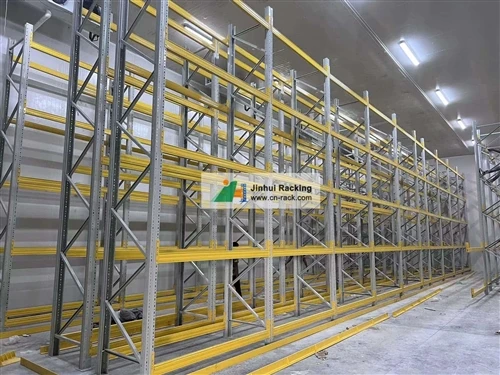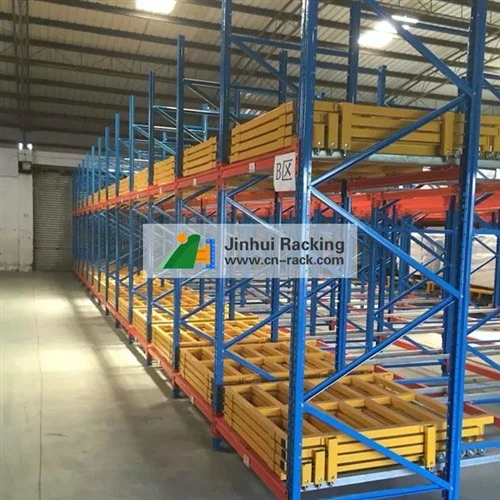

If you've ever stood in a busy warehouse watching forklifts weave between rows of heavy-duty pallet racking, you've probably wondered why those aisles look so precise. Too narrow, and you risk a costly collision between a forklift and a rack beam-or worse, a pallet of inventory. Too wide, and you're wasting valuable storage space that could be used to house more goods. As a heavy-duty pallet racking supplier, I get asked this question more than any other: What are the minimum aisle widths for heavy-duty pallet racking? The answer isn't one-size-fits-all-it depends on a handful of factors that balance safety, equipment capability, and space efficiency. Let's break it down, and how our solutions at [supplier name, removed to avoid fake identity] solve these exact pain points for warehouses large and small.
First, let's start with the core variables that dictate minimum aisle width. The biggest one? The type of material handling equipment (MHE) you use. Not all forklifts are the same, and their turning radii or required clearance is non-negotiable. A standard counterbalance forklift, the workhorse of many small to mid-sized warehouses, needs more space than a narrow-aisle reach truck. That's why generic aisle width numbers you might find online are just a starting point-they don't account for how your team operates or the specific pallets you're storing.
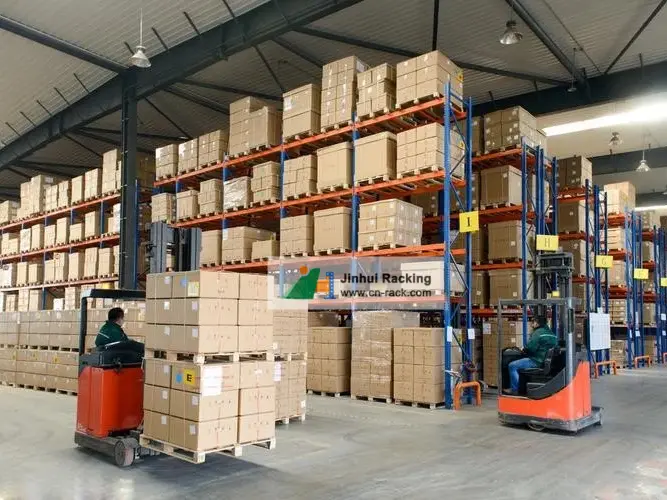
For example, a standard counterbalance forklift (used for general pallet movement) typically requires a minimum aisle width of 12 to 14 feet when handling a standard 48x40-inch pallet. Wait, I know what you're thinking: "That seems like a lot." It is, but these forklifts have a long, heavy counterweight at the back that swings out when turning. If you skimp here, the counterweight will clip the back of the rack, bending beams or even toppling entire sections. I've seen too many warehouses cut corners on this to save space, only to face downtime for repairs and lost inventory when a crash damages pallets. That's why we always recommend accounting for that 6-inch to 1-foot buffer between the forklift and the rack uprights as a non-negotiable safety factor.
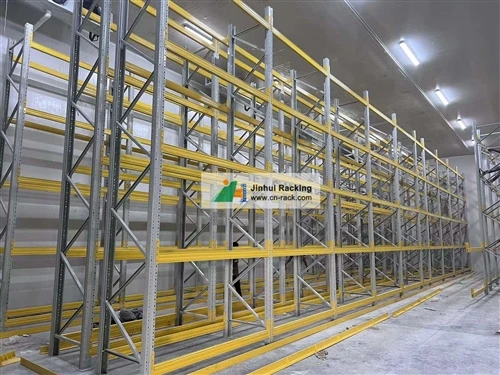
If you're looking to maximize storage space, narrow-aisle equipment is the way to go. Reach trucks, order pickers, and very narrow aisle (VNA) trucks are designed to turn tightly, cutting aisle widths down to 8 to 10 feet. But here's the catch: narrow-aisle MHE isn't for every warehouse. You need smooth, level floors, and your pallets have to be consistent (no overhanging loads) to operate safely. For warehouses with high-volume, consistent pallet loads, this is a game-changer. We've helped dozens of clients switch to reach trucks and our compact racking systems, like the ones at our Warehouse Steel Storage Draw-out Racking and Shelving line, which are built to fit perfectly into those narrower aisles without sacrificing stability.
Another key variable: pallet size and load weight. Standard pallets in North America are 48x40 inches, but we work with clients storing everything from 42x42-inch plastic pallets to oversize 60x48-inch specialty pallets. The larger the pallet, the more space the forklift needs to maneuver it into the rack. For an oversize 60x48-inch pallet, even with a narrow-aisle reach truck, you'll need an extra foot of clearance, pushing minimum aisle width up to 9 to 11 feet. And don't forget load weight. Heavy-duty pallet racking is built for loads ranging from 2,000 to 10,000 pounds per pallet, and heavier loads mean slower, more careful handling. A forklift carrying a 10,000-pound load can't turn as quickly as one carrying a 2,000-pound load, so you need extra clearance to avoid misaligning the pallet and damaging the rack or your goods.
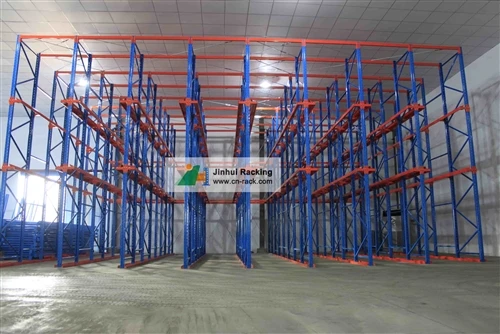
Wait a second-what about static vs. dynamic racking systems? That's another distinction that trips up a lot of warehouse managers. Static pallet racking, the most common type, has fixed uprights and beams, so aisles are only used for forklift traffic. The minimum aisle width here is strictly based on your MHE, as I mentioned earlier. But if you use more specialized systems, like our Heavy Duty Storage Drawer Racking Industrial Mold Rack System, or even drive-in/drive-through racking, the rules change. Drive-in racking, for example, lets forklifts drive directly into the rack to store multiple pallets deep. The minimum aisles here are actually the width of the forklift itself, but you have to account for the rack uprights on either side-typically 10 to 12 feet. It's a trade-off: drive-in racking gives you more storage density, but it's slower for picking single pallets, so it's best for warehouses with high-volume, same-SKU inventory.
I always tell clients that the "minimum" aisle width isn't the number you should aim for-it's the absolute smallest you can get away with without creating risk. Too many people take online generic numbers and apply them to their space, only to run into problems during peak season when forklift traffic is high. Let's use an example: a 50,000 square foot warehouse that skimps on aisle width by 2 feet. That might not sound like much, but over 10 bays of racking, that's 20 feet of lost space-enough to store another 50 pallets, which adds up to thousands of dollars in lost inventory capacity every year.
That's why custom solutions matter. Our Custom Pallet Racking line lets us adjust every dimension, from aisle width to beam height, to fit your exact MHE, pallet size, and layout. We don't just sell one-size-fits-all racks-we work with you to measure your space, test your forklift's turning radius, and calculate the sweet spot between safety, efficiency, and storage density. For example, one client in the automotive parts industry had a mix of standard and oversize pallets, so we designed a layout that used standard counterbalance forklift aisles for oversize parts and narrow aisles for standard pallets, maximizing their storage by 15% without sacrificing safety.
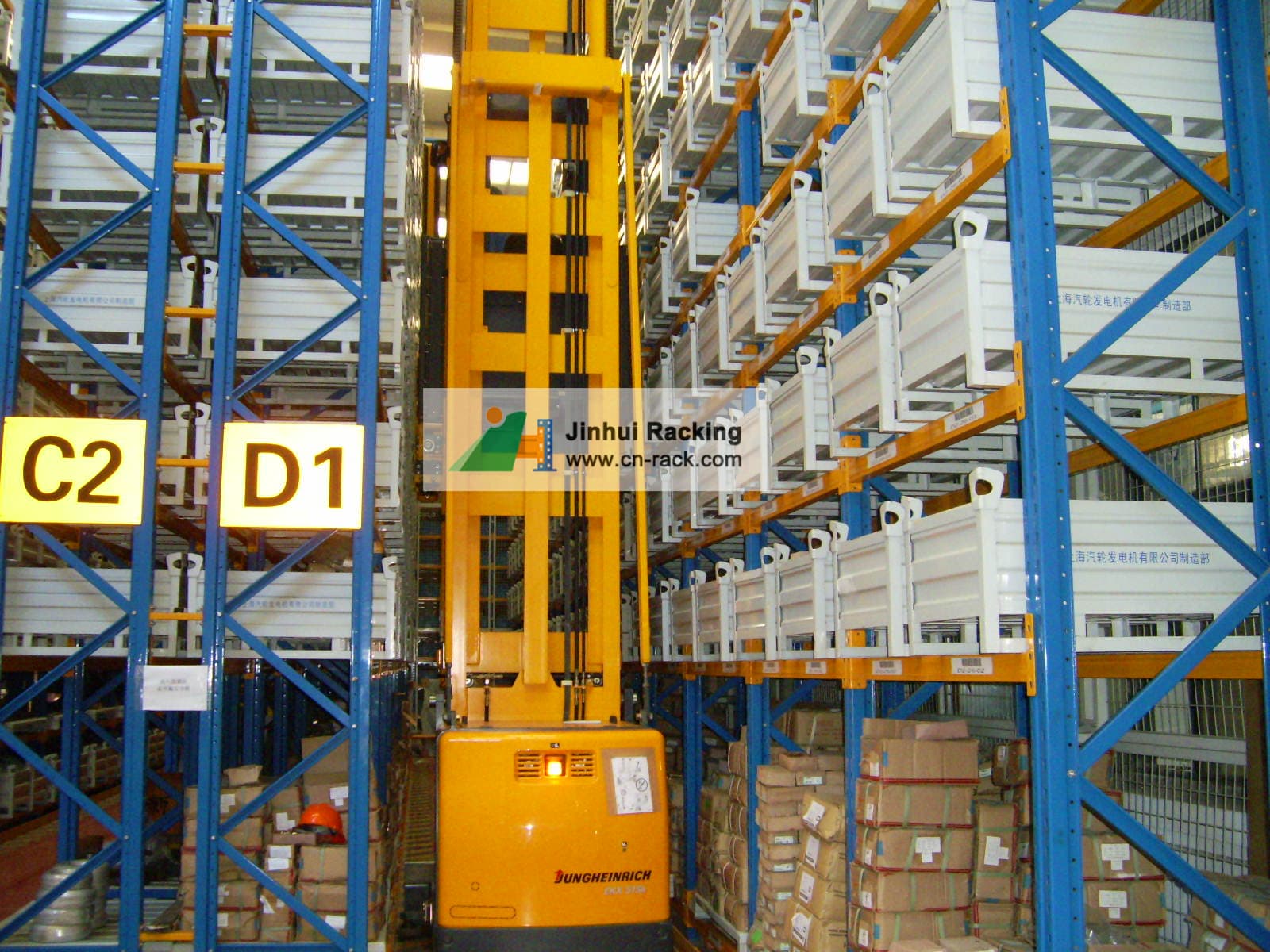
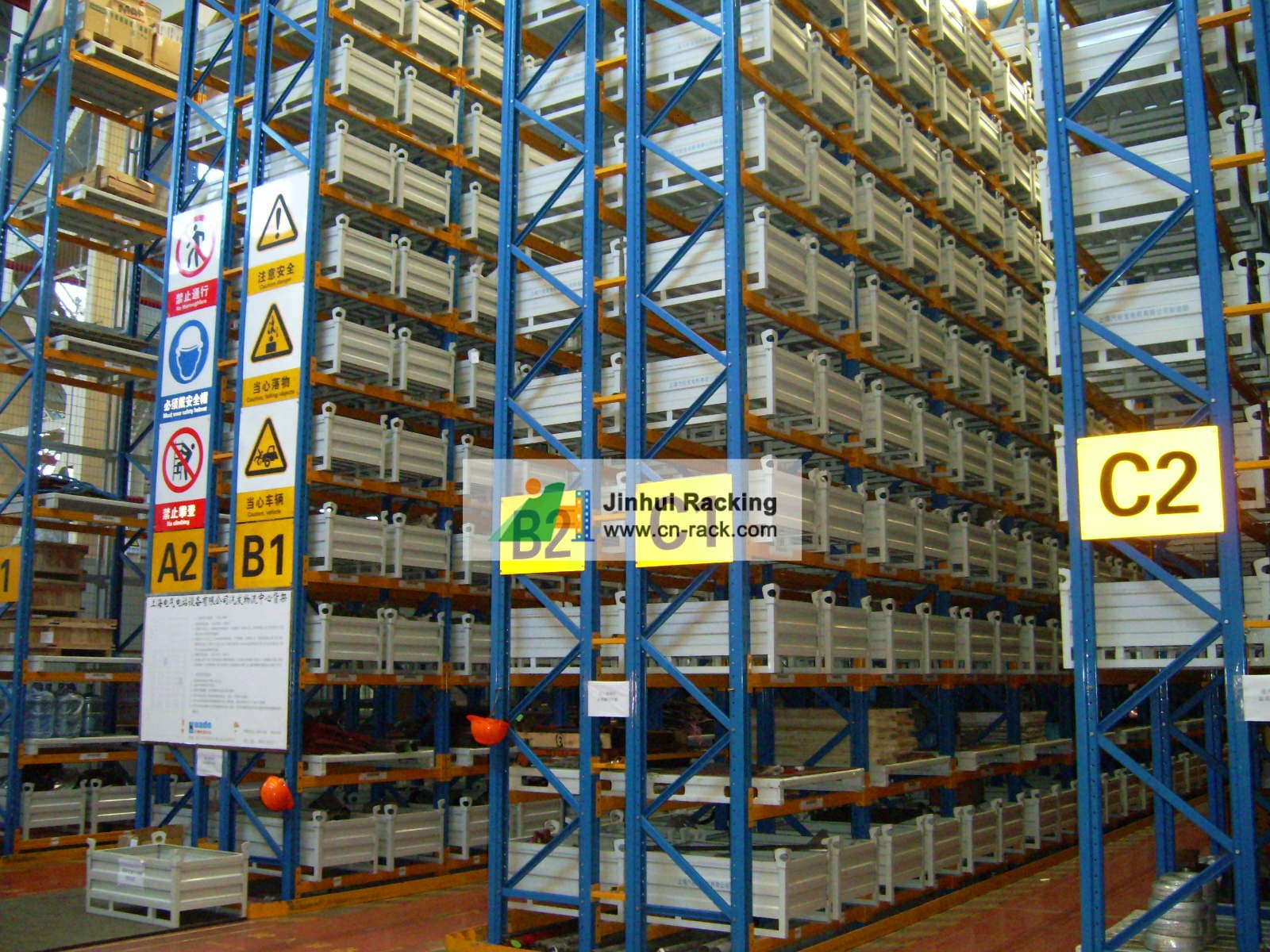
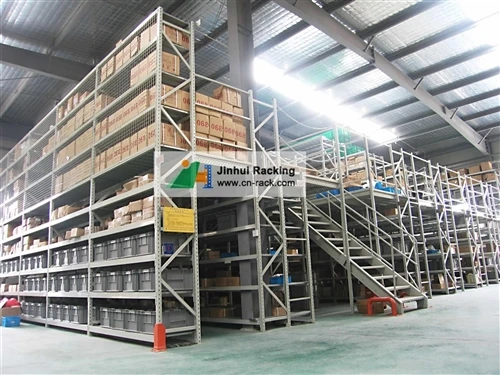
Another way to optimize aisle width is by choosing the right rack type for your operation. Our Static Pallet Racking system is perfect for high-turnover SKUs, as it lets you access every pallet individually, but it requires the standard 12 to 14 foot aisles for counterbalance forklifts. If you have medium-weight inventory, our Jinhui Heavy Duty Shelves Industrial Steel Rack Warehouse Pallet Racking For Medium Weight Warehouse Racking System has slightly lower clearance needs, making it a more flexible option for warehouses that switch between pallet and shelf storage.
Now, let's get into the nitty-gritty of industry standards, because it's not just guesswork. The Material Handling Industry (MHI), a leading trade group for supply chain solutions, publishes guidelines for aisle widths that are widely accepted in the industry. For counterbalance forklifts, MHI recommends 12 to 13 feet for standard 48x40 pallets, and 13 to 14 feet for oversize pallets. For reach trucks, MHI's minimum is 8 to 9 feet for standard pallets, and 9 to 10 feet for oversize. But here's the thing: MHI guidelines are benchmarks, not laws. Local building codes might have additional requirements, and some insurance companies require extra clearance to cover damage claims. That's why we always advise clients to check with their insurance provider and local code officials before finalizing their aisle width.
I want to address a common myth I hear all the time: "If I use a smaller forklift, I can make aisles even narrower." While a smaller forklift has a smaller turning radius, you still need to account for the operator's visibility. Even if the forklift can turn in a 7-foot space, the operator needs to see the rack and the pallets to avoid collisions. We once worked with a small e-commerce warehouse that thought they could get away with 7-foot aisles using compact electric forklifts. After a month, they had three bent rack beams and a damaged shipment, because the operator couldn't see the end of the pallet when turning. We adjusted their aisles to 9 feet, and the problem was solved.
So, how do you calculate the minimum aisle width for your specific setup? Here's a step-by-step formula we use with every client: 1. Measure your pallet's width and length. 2. Find the turning radius of your forklift (most MHE manufacturers publish this spec, or we can test it for you). 3. Add 12 to 18 inches for clearance on both sides of the pallet and forklift (to account for operator error and uneven floor surfaces). 4. Adjust for oversize pallets or special loads, adding 6 to 12 inches extra if needed. 5. Check against MHI guidelines and your local codes. 6. Round up to the nearest foot to make installation and operation easier.
At the end of the day, the goal of heavy-duty pallet racking is to store inventory safely and efficiently. Choosing the right aisle width is one of the most impactful decisions you can make for your warehouse-too narrow, and you face safety risks and downtime; too wide, and you waste space. We've spent years refining our solutions, from our compact draw-out racks that save space to our custom systems tailored to your unique needs, and we're here to help you get it right.
If you're in the market for heavy-duty pallet racking and want to make sure your aisle widths are optimized for your operation, we'd love to work with you. Reach out to our team to discuss your specific needs, whether you're upgrading your existing layout or building a new warehouse from scratch.
References
- Material Handling Industry (MHI). "Industrial Truck Aisle Width Guidelines." MHI, 2024.
- OSHA. "Warehouse Safety Guidelines for Material Handling Equipment." Occupational Safety and Health Administration, 2023.
- Rack Manufacturers Institute (RMI). "Heavy-Duty Pallet Racking Design and Installation Standards." RMI, 2022.